PRINTED PAGE 631NKJV · STUDY EDITION
1 Chronicles INTRODUCTION 631
and his estrangement from his son Absalom (2 Sam. 15). These are not omitted to give a false impression of
David’s character, for the books of Samuel recount these incidents in detail. Instead, Chronicles was written to
inspire the remnant to follow in the spiritual footsteps of David.
At a time when the Israelites were rebuilding the nation and the temple (Ezra 3:7–13), the chronicler painted
a picture of David’s kingdom as a kingdom founded on the true worship of God. Not the throne, but the tab
ernacle and temple were the focus of David’s kingdom. Chronicles extensively describes how David moved
the ark of the covenant to a suitable place of worship (13:1—16:3), appointed appropriate religious personnel
(16:4–6, 37–43; 23:1—26:32), and made plans for building a permanent temple (chs. 22; 28; 29). The theme of
Chronicles is that God Himself established David’s kingdom (29:10, 11) in fulfillment of His promises to Abraham,
Isaac, and Jacob. Through the Davidic covenant, David’s kingdom itself embodies the promise of the future
kingdom whose ruler is the great Son of David, Jesus Christ.
Christ in the Scriptures
As in 1 and 2 Samuel, Jesus is foreshadowed in this book through the life and influence of King David. God’s
covenant with David is a prelude to what the Messiah will bring about (7:11–14). Some might try to reason that
David’s son Solomon fulfilled the covenant, but they would only be partly right. Only Jesus can ultimately fulfill it.
The fact that the tribe of Judah is listed first in the national genealogy (2:3–15) was not coincidental. The
writer was quietly celebrating that the monarchy, the temple construction, and the future Messiah (Jesus) would
come from this tribe.
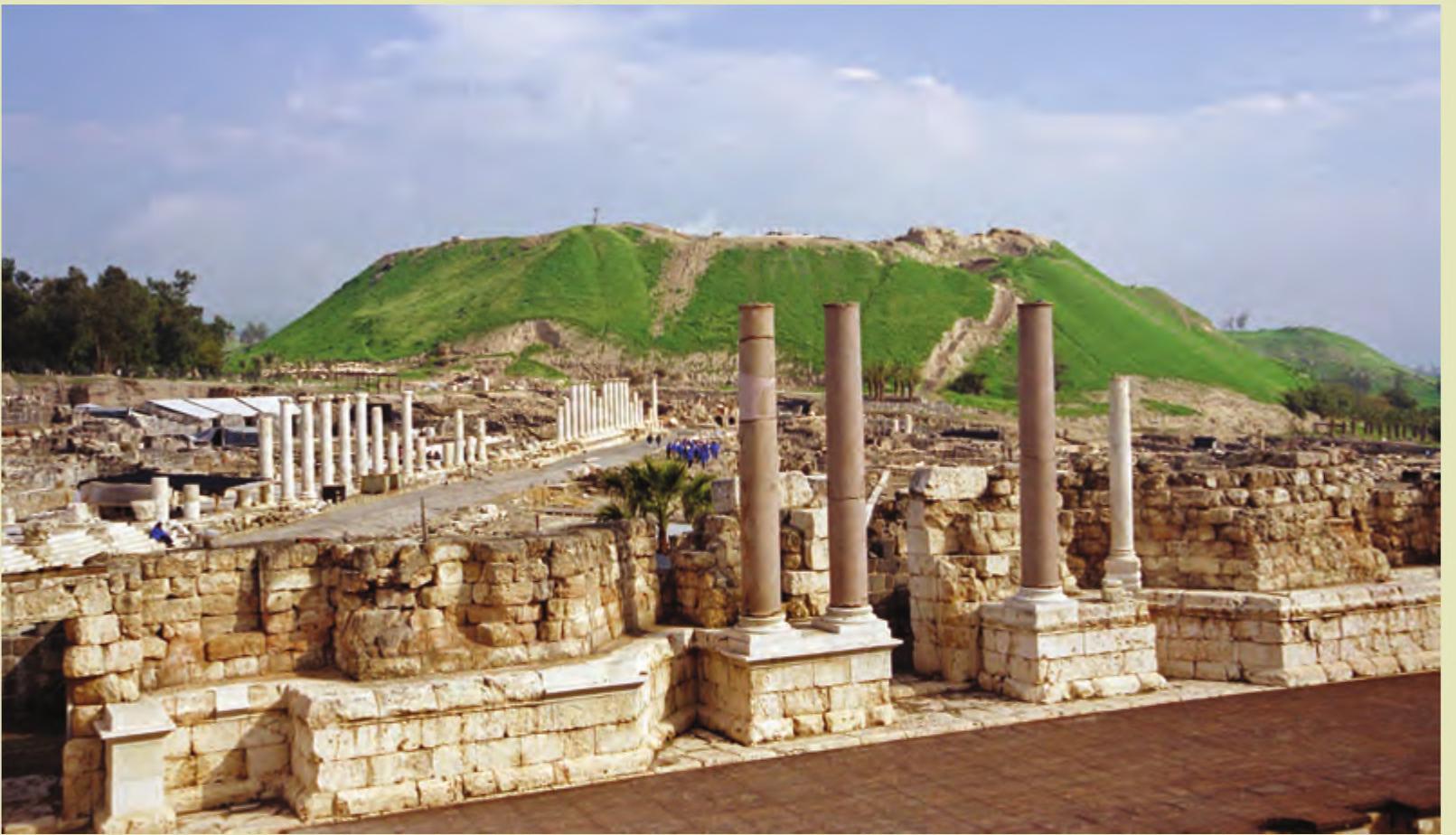
Beth Shean is the location of the temple of Dagon mentioned in 1 Chr. 10:10. The Philistine and Israelite cities were
at the top of this tell (mound in the background).
© William D. Mounce
Original illustrations
End of source page 666