PRINTED PAGE 426NKJV · STUDY EDITION
426 1 Samuel INTRODUCTION
sojourn among the Philistine cities (5:1—6:16), the ark was returned to Beth Shemesh (6:19) and then kept at
Kirjath Jearim (7:1) until David brought it to Jerusalem (2 Sam. 6:1–17).
During this time, the Israelites became dissatisfied with the abusive rule of the judges (8:3). The people
longed for the glories of a monarchy such as they saw in the surrounding nations. So the Lord allowed the
Israelites to have their way. He gave them a king like the other nations: the handsome and tall King Saul (10:1).
Although Saul appeared to be well suited for leading a nation, his reign ended in tragedy because he ignored
the word of God. Much of the action of 1 Samuel is associated with the tumultuous life, reign, and decline of
Saul, contrasted with the rapid rise of the young and faithful David.
During this early period of the Israelite monarchy (c. 1050–970 b.c.), the great empires of the ancient Middle
East were in a state of weakness. The Hittites of Asia Minor had passed into insignificance. Assyria was in a state
of decline, and Egypt was weakened by internal conflict. The Philistines constituted Israel’s main threat during
this period. Their skill in working iron had given them a decided military and economic advantage over Israel.
Yet the threat of the Philistines had a positive impact on Israel’s political situation. It caused the infant nation
to unite under the leadership of its first kings, Saul and David.
Purpose and Literary Form The purpose of 1 Samuel is to provide an official account of the rise of the
monarchy during the time of Samuel and the development of it under Saul and David. The book particularly
focuses on the rise of David during this period.
In fact, the second half of the book and first half of 2 Samuel amount to an apology for David’s rise to the
throne. The similarities of this section to the Apology of Hattusilis, a thirteenth-century b.c. writing, are remark-
able. In this ancient document, a Hittite king outlined the reasons for the legitimacy of his rule. Such an apology
was particularly important in the case of a king—like David—who founded a new dynasty. Hattusilis’s dynastic
defense included the following elements:
1. A detailed description of the disqualifications of the preceding ruler (compare 1 Sam. 15:1–35).
2. An extended history of events leading up to the new king’s accession (compare 1 Sam. 16:1 and 2 Sam. 5:17).
3. A defense of the new king’s ability to rule, as evidenced by military achievements (compare 1 Sam. 17:1–58).
4. A record of the new king’s leniency on political foes, in contrast to usurpers, who typically assassinated
the former king (compare 24:1–10; 26:1–9).
5. A report of the new king’s interest in religion (compare 2 Sam. 6:1–19; 7:1–29).
6. A conclusion that included a summary of the new king’s reign, demonstrating the divine blessing on his
rule as evidenced by the expansion of his kingdom and the establishment of peace with surrounding
nations (compare 2 Sam. 8:1–18).
The similarities between the Apology of Hattusilis and 1 Samuel 15:1 through 2 Samuel 8:18 illustrate clearly
how that part of 1 and 2 Samuel serves as an apology for David’s reign. Part of the apology is the irrefutable
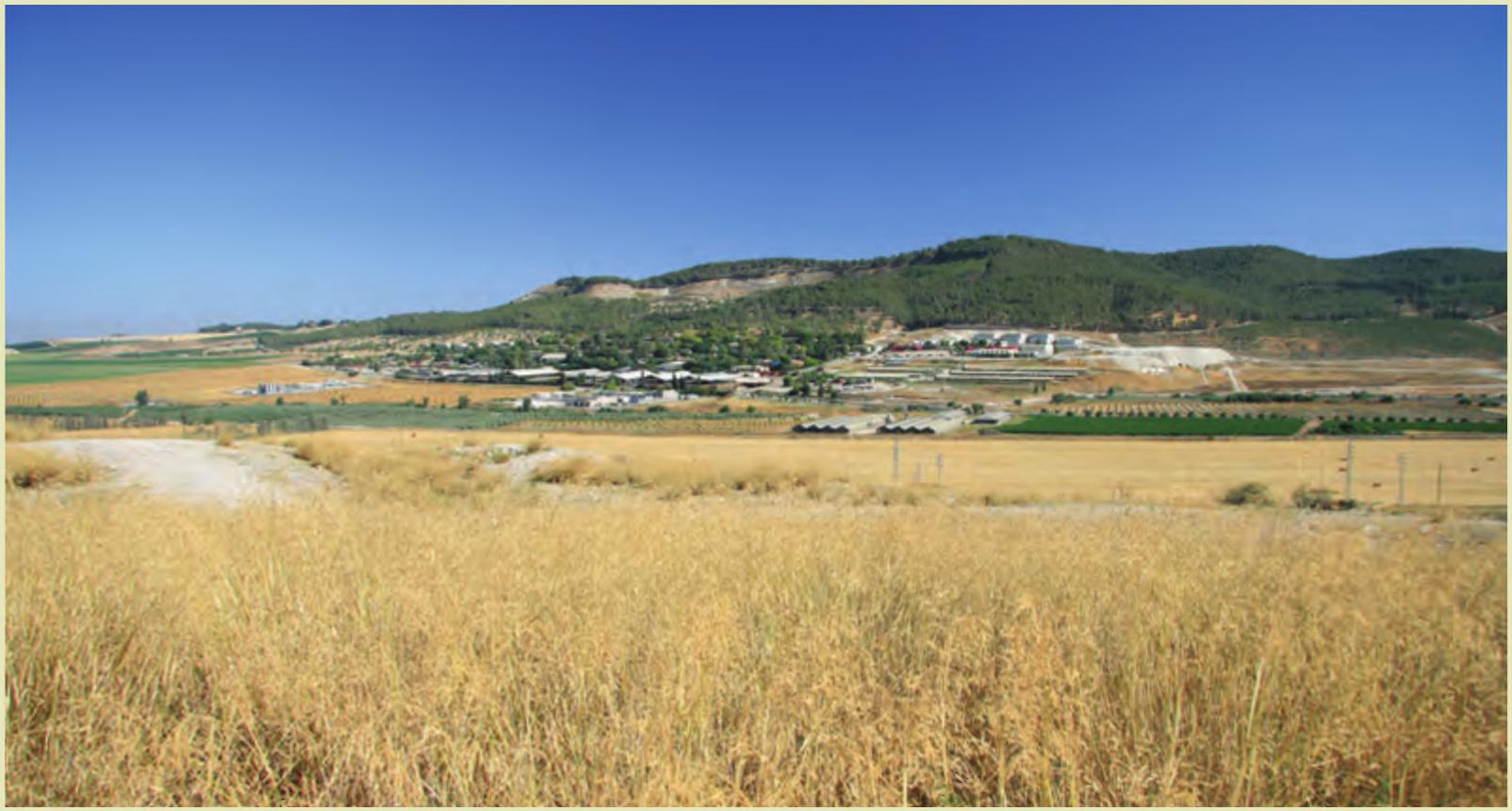
View of the Sorek Valley. The ark of the covenant was brought through the Sorek Valley on the return trip to the
mountains of Judah.
www.HolyLandPhotos.org
Original illustrations
End of source page 461