PRINTED PAGE 374NKJV · STUDY EDITION
374 Judges INTRODUCTION
The purpose of the message is supported by the structure of the book itself. A close examination of chapters
17–21 leads to the conclusion that they are out of sequence with the events in the earlier chapters. Clues within
the text support the theory that the events described in these latter chapters actually took place early in the
period of the judges. For instance, we see the near unanimous action of Israel’s tribal convocation, which suc-
cessfully unites to take punitive action against Benjamin in chapter 20. This tribal league was clearly active during
the time of Phinehas and in Joshua’s day (Josh. 22:9–34). In these chapters, the Philistines are not mentioned as
a military threat; the military campaigns described in chapters 20; 21 would have been unlikely in later times,
when the Philistines dominated much of Israel’s territory. Furthermore, Bethel and Mizpah are both named as
sites of a major religious sanctuary (20:1, 18, 31; 21:1) rather than Shiloh, which was a more prominent religious
center in the Philistine period (1 Sam. 1:3, 9; 3:21; 4:4).
This arrangement of the narrative, while not strictly chronological, reinforces the theme that the period of
the judges was one of steep decline. The sordid events in these last chapters, while they may have occurred
early in the period, are purposely placed at the end of the book as a fitting epitaph to a degenerate time.
Christ in the Scriptures
In stark contrast to the Book of Joshua, Judges does not offer a complimentary picture of God’s people. Instead
of obedient men and women conquering a land by trusting God’s power, we see an idolatrous nation disobeying
God and tasting continual defeat. But thankfully, this book also provides a glimpse of what Jesus would do for
all of us who, like the ancient Jews, struggle with disobedience. Each one of the 17 judges is a kind of “savior.”
(Fourteen are listed in Judges and three more in 1 Samuel.) They rule with a hand on the gavel and an eye toward
God. Thus, like Jesus, they provide spiritual direction and restore the guilty into fellowship with God. Also like
Jesus they invite those for whom they came to follow them ( Judg. 3:28; Mark 1:17).
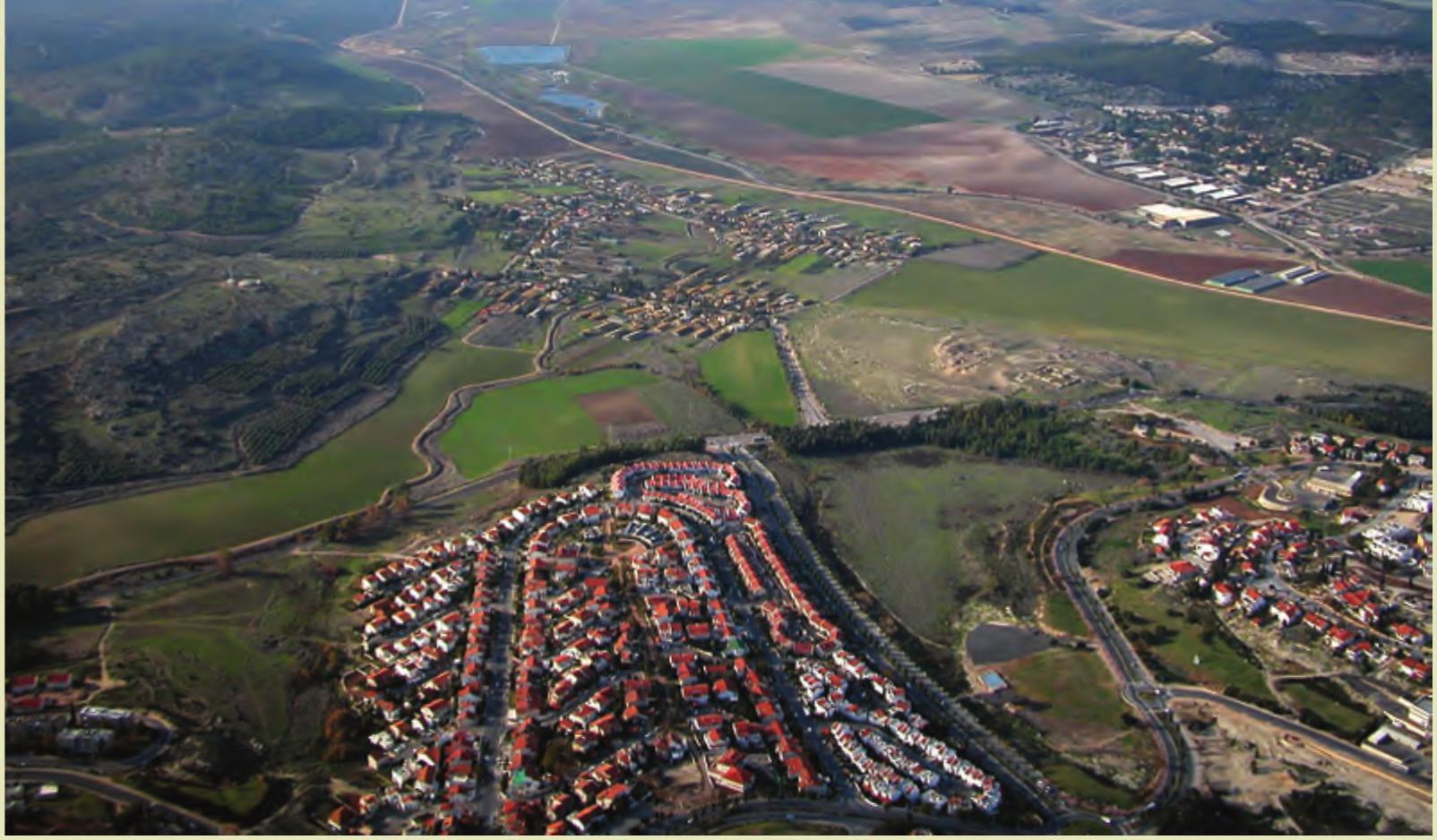
Aerial view of Beth Shemesh and the Sorek Valley. Beth Shemesh is about 12 miles west of Jerusalem and is where
the Philistines returned the ark of the covenant to the Israelites (1 Sam. 6). The Sorek Valley is where Samson fell in
love with Delilah (Judg. 16:4).
Todd Bolen/www.BiblePlaces.com
Original illustrations
End of source page 409