PRINTED PAGE 316NKJV · STUDY EDITION
316 | Deuteronomy 27:14
22 t Lev. 18:9 23 u Lev. 18:17; 20:14
14 k Deut. 33:10;
Josh. 8:33; Dan. 9:11
15 l Ex. 20:4, 23;
34:17; Lev. 19:4;
26:1; Deut. 4:16, 23;
Is. 44:9; Hos. 13:2
m Num. 5:22; Jer.
11:5; 1 Cor. 14:16 2 a
detestable thing
16 n Ex. 20:12; Lev.
19:3; 20:9; Deut.
5:16; 21:18-21; Ezek.
22:7
17 o Deut. 19:14;
Prov. 22:28
18 p Lev. 19:14
19 q Ex. 22:21, 22;
23:9; Lev. 19:33;
Deut. 10:18; 24:17
20 r Lev. 18:8;
20:11; Deut. 22:30;
1 Cor. 5:1
21 s Ex. 22:19; Lev.
18:23; 20:15, 16
justice due the stranger, the fatherless,
and widow.’
“And all the people shall say, ‘Amen!’
20 r ‘Cursed is the one who lies with his
father’s wife, because he has uncovered
his father’s bed.’
“And all the people shall say, ‘Amen!’
21 s ‘Cursed is the one who lies with any
kind of animal.’
“And all the people shall say, ‘Amen!’
22 t ‘Cursed is the one who lies with his
sister, the daughter of his father or the
daughter of his mother.’
“And all the people shall say, ‘Amen!’
23 u ‘Cursed is the one who lies with his
mother-in-law.’
“And all the people shall say, ‘Amen!’
14 “And k the Levites shall speak with
a loud voice and say to all the men of
Israel: 15 l ‘Cursed is the one who makes
a carved or molded image, 2 an abomina
tion to the LORD, the work of the hands
of the craftsman, and sets it up in
secret.’
m “And all the people shall answer and
say, ‘Amen!’
16 n ‘Cursed is the one who treats his fa
ther or his mother with contempt.’
“And all the people shall say, ‘Amen!’
17 o ‘Cursed is the one who moves his
neighbor’s landmark.’
“And all the people shall say, ‘Amen!’
18 p ‘Cursed is the one who makes the
blind to wander off the road.’
“And all the people shall say, ‘Amen!’
19 q ‘Cursed is the one who perverts the
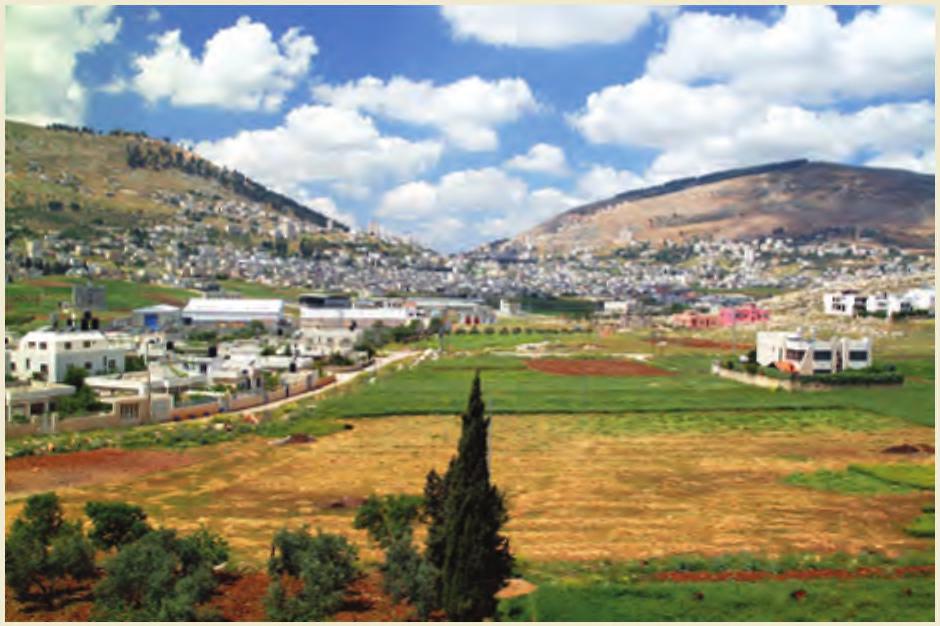
is usually covered with vegetation. Consequently, Mt. Ebal was an
ideal place for the curses to be recited, and Mt. Gerizim was suitable
for the blessings. The association of the place and the word would
have been unforgettable. Furthermore, the two mountains are quite
close, so they would serve as a natural amphitheater for the recita-
tion of the curses and blessings by the Levites.
27:15, 16 The first curse pertained to idolatry. A carved or molded
image defied the first or second commandment or both (5:7–9).
Amen was an expression of approval and submission to God’s Word.
The second curse pertained to an infraction of the fifth command-
ment (5:16; 21:18–21).
27:17 The third curse pertained to justice and greed. landmark:
Moving the stone with the intent of extending the boundary of
one’s land enhanced one’s own personal prosperity at the expense
of someone else (19:14).
27:18 The fourth curse required the humane treatment of disabled
people. blind: The underlying assumption is that only a person
of great cruelty and no love for God would take advantage of a
disabled person.
27:19 The fifth curse had to do with compassion to those who were
defenseless. The stranger, the fatherless, and widow did not
have the legal and social resources to defend themselves.
27:20–23 The sixth through the ninth curses covered sexual moral-
ity. Sexual relations with animals (bestiality) and incest were strictly
prohibited (Ex. 22:19; Lev. 18:23; 20:15, 16).
Mounts Ebal and Gerizim
Baker Photo Archive
Covenant Renewal
At Sinai, God for the first time announced His covenant to the entire nation of Israel (5:22–33). Although this generation
of Israelites witnessed God’s awe-inspiring revelation of Himself, they still did not trust Him. Because of their rebellion,
they were barred from entering the Promised Land. Now the second generation was preparing to enter the Promised
Land, just as God had promised. Before they entered, Moses gathered the people together to renew their commitment
to the covenant.
The covenant renewal involved two stages. The first stage was performed by Moses on the plains of Moab (chs.
27–30). In this ceremony, Moses presented the people two separate ways. One way led to God’s curses and ultimately to
death. The other way led to God’s blessing and to life. Then Moses challenged the new generation to choose the way of
life, and he exhorted them to follow God’s law
and teach it to their children. That way would
lead to God’s abundant blessings for Israel. On
the other hand, worshiping dead idols would
lead to destruction and death. Since Moses
himself could not enter the Promised Land, he
publicly recognized Joshua as his successor at
this ceremony.
The second stage of the covenant renewal
ceremony was performed by Joshua in the Prom-
ised Land itself (27:1–26; Josh. 8:30–35). After
the conquest of Canaan, the Israelites gathered
between the mountains of Ebal and Gerizim. For
dramatic effect, the curses for abandoning God
were announced on the barren mountaintop
of Ebal, while the blessings for following God
were announced on the green slopes of Gerizim.
There, the Israelites renewed their commitment
to the Lord, who had fulfilled His promises to
Abraham by giving them the land.
Original illustrations
End of source page 351