PRINTED PAGE 181NKJV · STUDY EDITION
Leviticus 13:12 | 181
the swelling, 11 it is an old leprosy on the
skin of his body. The priest shall pro
nounce him 4 unclean, and shall not iso
late him, for he is unclean.
12 “And if leprosy breaks out all over
the skin, and the leprosy covers all the
skin of the one who has the sore, from
his head to his foot, wherever the priest
lamb, then she may bring two turtledoves
or two young pigeons—one as a burnt of
fering and the other as a sin offering. i So
the priest shall make atonement for her,
and she will be 5 clean.’ ”
The Law Concerning Leprosy
13
And the LORD spoke to Moses and
Aaron, saying: 2 “When a man has
on the skin of his body a swelling, a a
scab, or a bright spot, and it becomes on
the skin of his body like a 1 leprous sore,
b then he shall be brought to Aaron the
priest or to one of his sons the priests.
3 The priest shall examine the sore on
the skin of the body; and if the hair on
the sore has turned white, and the sore
appears to be deeper than the skin of his
body, it is a leprous sore. Then the priest
shall examine him, and pronounce him
2 unclean. 4 But if the bright spot is white
on the skin of his body, and does not ap
pear to be deeper than the skin, and its
hair has not turned white, then the priest
shall isolate the one who has the sore
c seven days. 5 And the priest shall exam
ine him on the seventh day; and indeed
if the sore appears to be as it was, and
the sore has not spread on the skin, then
the priest shall isolate him another seven
days. 6 Then the priest shall examine him
again on the seventh day; and indeed if
the sore has faded, and the sore has not
spread on the skin, then the priest shall
pronounce him clean; it is only a scab, and
he d shall wash his clothes and be clean.
7 But if the scab should at all spread over
the skin, after he has been seen by the
priest for his cleansing, he shall be seen
by the priest again. 8 And if the priest
sees that the scab has indeed spread on
the skin, then the priest shall pronounce
him 3 unclean. It is leprosy.
9 “When the leprous sore is on a per
son, then he shall be brought to the
priest. 10 e And the priest shall examine
him; and indeed if the swelling on the
skin is white, and it has turned the hair
white, and there is a spot of raw flesh in
4 c Lev. 14:8 6 d Lev. 11:25; 14:8; [John 13:8, 10]
8 3 defiled 10 e Num. 12:10, 12; 2 Kin. 5:27; 2 Chr. 26:19, 20
11 4 defiled
8 i Lev. 4:26
5 pure
CHAPTER 13
2 a Deut. 28:27; Is.
3:17 b Deut. 17:8,
9; 24:8; Mal. 2:7;
Luke 17:14 1 Heb.
saraath, disfiguring
skin diseases,
including leprosy,
and so in vv. 2-46
and 14:2-32
3 2 defiled
birth of Jesus and the days of her purification, went to the temple
in Jerusalem in accordance with this regulation (Luke 2:22–24). Her
offering was a pair of birds. Joseph and Mary obviously were poor;
the Magi had not yet visited them with their expensive gifts for the
newborn King.
13:2 The Hebrew word for a man means a “human being”—that
is, anyone. A swelling, a scab, or a bright spot would often
be a minor ailment that healed within a few days and caused no
further concern. he shall be brought: The most serious result of
the priest’s examination was to be declared unclean and banished
from the camp. The natural tendency would be to put off seeing the
priest about a condition. However, ritual uncleanness was a serious
matter for all the people. It was important to diagnose skin problems
immediately so that the whole camp did not become unclean. If the
afflicted person did not come on his own initiative, his family and
clan leaders were responsible for bringing him.
13:3 The priest shall examine: The priest made the diagnosis.
However, nothing is said about how to treat the ailments. The sub-
ject of the passage is not medical treatment but ritual impurity,
and making sure that the community of Israel, and particularly the
tabernacle, would not become unclean.
13:6 he shall wash his clothes: Personal hygiene was an impor
tant factor in identifying and preventing the spread of infectious
diseases, even those that did not cause a person to be unclean.
13:11 shall not isolate him: Isolation, or quarantine, was for the
purpose of protecting the community until a diagnosis was reached.
In this case, the patient was already diagnosed as unclean, which
meant he had to live outside the camp (v. 46).
Bible Times & Culture Notes
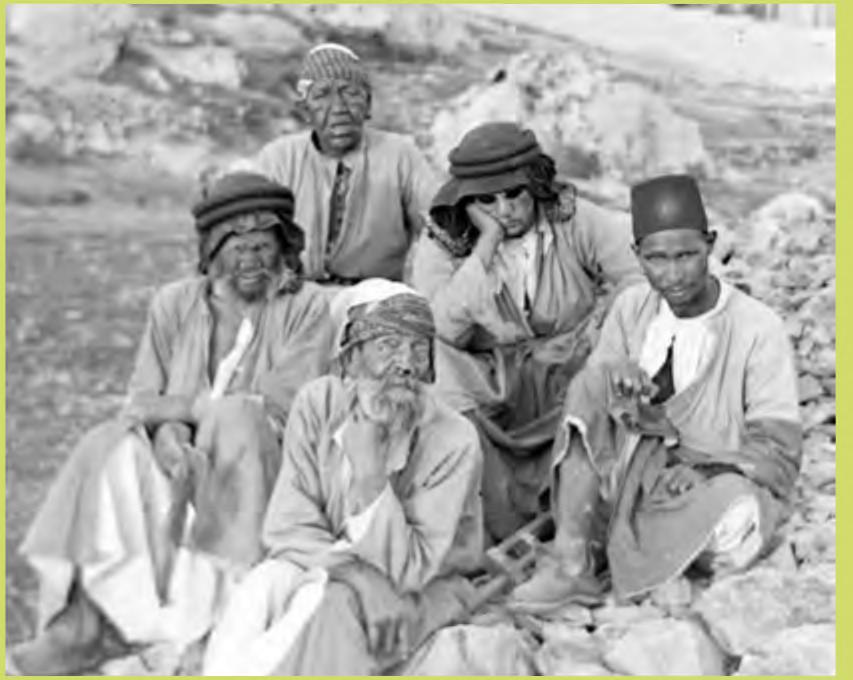
Leprosy
Leprosy is caused by a bacillus and is characterized by the forma-
tion of nodules that spread, causing loss of sensation and defor-
mity. Now treated with sulfone drugs, leprosy is perhaps the least
infectious of all known contagious diseases. Hansen’s Disease, as it
is more properly known, was often misdiagnosed in biblical times.
People believed then that it was highly contagious and heredi-
tary. On the basis of a hair in a scab, a pimple, or a spot on the skin
that had turned white, the priest would declare a person to be a
leper and would quarantine him or her for seven days. If healed
of leprosy, the person was expected to offer certain sacrifices and
engage in rites of purification (14:1–32).
A group of lepers
Library of Congress, LC-DIG-matpc-10605
Original illustrations
End of source page 216