PRINTED PAGE 2095NKJV · STUDY EDITION
REVELATION 18:7 | 2095
2 e Is. 14:23
3 f Jer. 51:7; Rev.
14:8 g Is. 47:15 2 Lit.
strengths
4 h Is. 48:20
5 i Gen. 18:20 j Rev.
16:19 3 NU, M have
been heaped up
6 k Ps. 137:8; Jer.
50:15, 29 l Rev.
14:10 m Rev. 16:19
4 NU, M omit to you
18:3 This unparalleled judgment from God has come because of
Babylon’s spiritual fornication (idolatry and abominations; see 17:4)
with the nations and their kings, largely through rich commerce,
providing many merchants an abundance of wealth.
18:4 Come out . . . my people is a command that echoes Is. 52:11
and especially Jer. 51:45, prophecies proclaimed at a time when the
Babylonian Empire was ripe for judgment.
18:6–8 God will avenge Babylon’s long history of iniquities and
sinful works to the fullest extent and beyond (double; see Is. 51:19).
Instead of glorifying God, Babylon glorified herself (see 14:7; Rom.
1:21) with a royal lifestyle. She had thrived on pleasure and excess,
but now judgment will leave her with only torment and sorrow.
The climactic judgment of ancient Babylon also arrived in one day
(see “one hour” in vv. 10, 17, 19), as Darius the Mede invaded the city
and killed Belshazzar (see Dan. 5:30, 31).
ceive of her plagues. 5 i For her sins 3 have
reached to heaven, and j God has remem
bered her iniquities. 6 k Render to her just
as she rendered 4 to you, and repay her
double according to her works; l in the
cup which she has mixed, m mix double
for her. 7 n In the measure that she glo
rified herself and lived 5 luxuriously, in
e a cage for every unclean and hated bird!
3 For all the nations f have drunk of the
wine of the wrath of her fornication, the
kings of the earth have committed forni
cation with her, g and the merchants of
the earth have become rich through the
2 abundance of her luxury.”
4 And I heard another voice from heav
en saying, h “Come out of her, my people,
lest you share in her sins, and lest you re
7 n Ezek. 28:2-8 5 sensually
Bible Times & Culture Notes
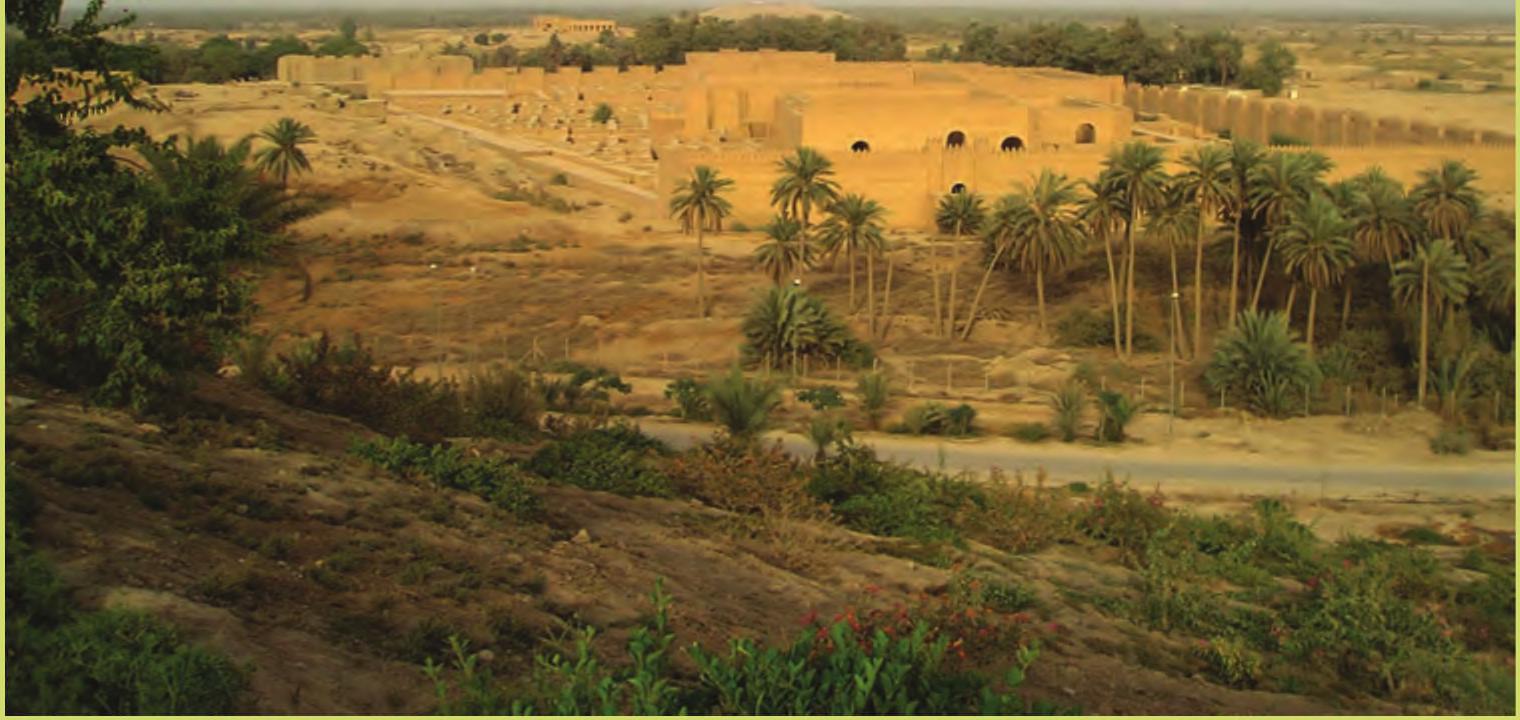
Babylon
In Revelation, the world in rebellion against God is called “Babylon.” The OT prophets often prophesied the fall of Babylon,
the capital of an empire that destroyed God’s city, Jerusalem, and carried His people away as captives (Is. 14:22; 21:9; 43:14;
Jer. 50:9; 51:37). Today, the ruins of this city stand as an eloquent testimony to the passing of proud empires and to the
providential hand of God.
In Revelation, Babylon is a word-picture for a society that persecuted God’s people but that God will eventually
destroy. The name may have been a kind of code name for pre-Christian Rome, which was built on seven hills (17:9; see
also 1 Pet. 5:13) and which was already persecuting the church. Since that time, generations of Christians have been able
to identify their own Babylons and have found reassurance in Revelation’s message.
Reconstruction of ancient Babylon
Wikimedia Commons
Original illustrations
End of source page 2130