PRINTED PAGE 2019NKJV · STUDY EDITION
1 Peter INTRODUCTION 2019
over rugged terrain and treacherous seas. The bearer of the letter would have encountered Jews and Gentiles,
Christians and pagans, free citizens and slaves. Some of the places in which the letter was read were cosmopol-
itan trade centers that were links between the Middle East and Europe. Other places were isolated villages. Yet
throughout Asia Minor, small groups of Christians of a wide variety of social, ethnic, and cultural backgrounds
would gather to hear God’s word, to praise God, and to encourage one another in the faith.
Theology Peter blended five different themes in this letter. (1) He emphasized that Christians can expect
suffering as a natural part of a life dedicated to Christ. Suffering was God’s tool to shape godly character within
them (1:6, 7; 3:14; 4:12–14). (2) He went on to exhort Christians to live righteous and holy lives in the face of the
evils they were experiencing (1:13–16, 22; 2:1–5, 11, 12; 3:15; 4:1, 2, 7–11; 5:8–10). No matter how tempting it was,
Christians were not to return evil for evil. That is a worldly and not a Christian response to persecution. (3) No
matter how much suffering they experienced, Peter assured the Christians in Asia Minor they did not deserve
it. Their suffering was a part of their service to God and His kingdom (2:20; 3:16, 17; 4:15–19). Although Christians
would suffer injustice on this earth, there would come a time when God would right every wrong and reward
those who have endured persecution for His name. (4) In light of this, Peter encouraged Christians to submit
themselves to others for the sake of the gospel and for the sake of harmonious interpersonal relationships
(2:13–19; 3:1–9; 5:1–7). Christ would eventually judge their actions, and the difficulties they were experiencing
would not be an excuse for rebellion and dissension. (5) Finally Peter used this letter as an opportunity to drive
home the central truth of the gospel, that Jesus endured the agony of the Cross to save us from our bondage
to sin (1:2–5, 7–11, 17–21; 2:21–24; 3:18–22). Christ’s example—His sinless life, His quiet endurance of suffering,
and His commitment to the truth—should be our model in all the difficulties of this life.
Christ in the Scriptures
For Peter, Jesus is the basis for our living hope and inheritance (1:3, 4). What is more, the love relationship that is
available with Him is a source of inexpressible joy (1:8). Peter is quick to convey what Paul and the Gospel writers
have already established—that Jesus’ suffering and death provide redemption for all who trust in Him “who
Himself bore our sins in His own body on the tree, that we, having died to sins, might live for righteousness—by
whose stripes you were healed” (2:24).
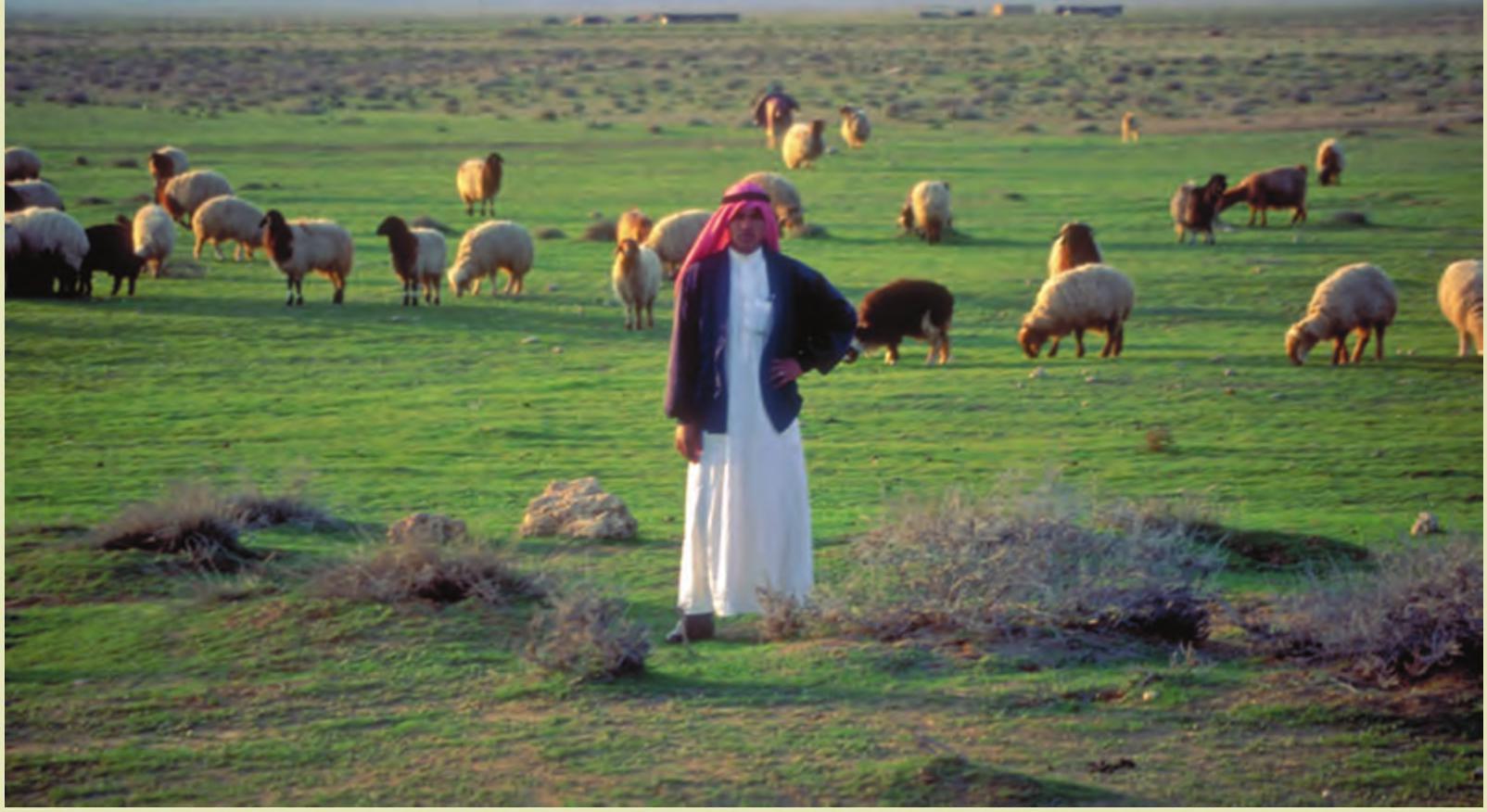
Jesus also is lifted up as the Overseer and Chief Shepherd of all Christians (2:25; 5:4), and when He appears,
those who have a relationship with Him will be glorified.
A modern Syrian shepherd with his sheep. Jesus is referred to as the Chief Shepherd in 1 Peter 5:4.
© 1995 Phoenix Data Systems
Original illustrations
End of source page 2054