PRINTED PAGE 1986NKJV · STUDY EDITION
1986 | Hebrews 2:8
7 5 NU, M omit the
rest of v. 7.
8 l Matt. 28:18 m Ps.
8:6; 1 Cor. 15:25, 27
9 n Phil. 2:7-9;
Heb. 1:9
o Acts 2:33; 3:13;
1 Pet. 1:21 p Is.
53:12; [John 3:16]
6 Or for a little while
10 q Col. 1:16
was made 6 a little lower than the angels,
for the suffering of death o crowned with
glory and honor, that He, by the grace of
God, might taste death p for everyone.
Bringing Many Sons to Glory
10 For it was fitting for Him, q for whom
are all things and by whom are all things,
in bringing many sons to glory, to make
5 And set him over the works of Your
hands.
8 l You have put all things in subjection
under his feet.”
For in that He put all in subjection under
him, He left nothing that is not put under
him. But now m we do not yet see all things
put under him. 9 But we see Jesus, n who
reflection on Gen. 1, to prove that God has placed humanity over all
created things, which includes the angelic world.
2:8 But now: The rule of human beings over God’s creation has
been delayed because of sin (v. 15). Humanity’s collusion with Satan
has brought all people into collision with God. Not yet indicates
that the delay is only temporary.
2:9 Human beings will rule over creation, but it will be through Jesus
Christ. But we see Jesus: The author uses Christ’s human name
Jesus for the first time in this letter. Citing phrases from Ps. 8, the
author points out that Christ, by His humiliation and exaltation, has
regained what Adam lost, the original calling for human beings to
rule over God’s creation (see Phil. 2:6–11; Rev. 5:1–14).
2:10 The Greek word for captain means “leader” or “originator.”
The word describes a pioneer or pathfinder. Jesus’ endurance of
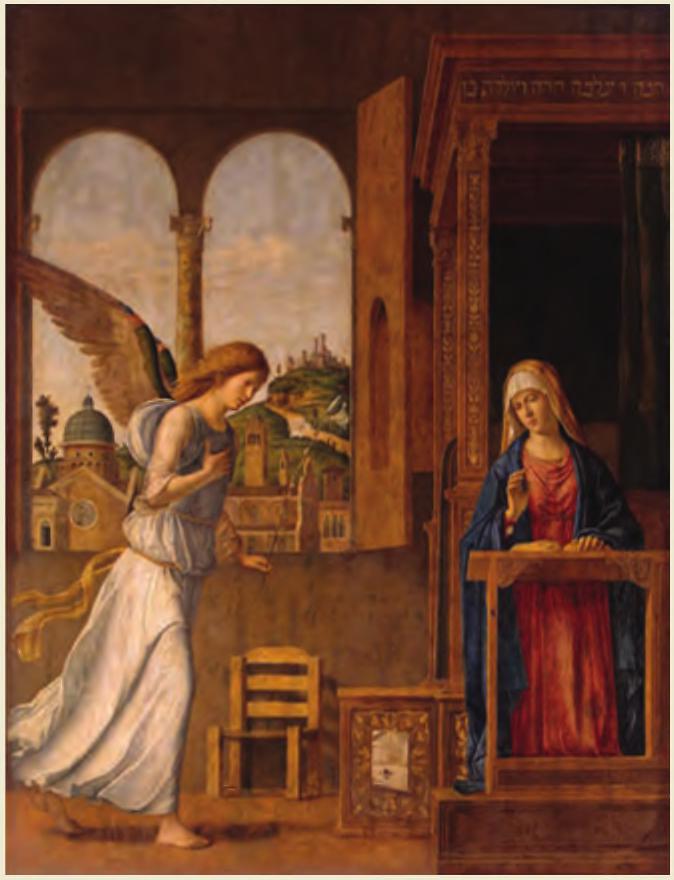
The angel Gabriel appears to Mary to predict the
birth of Jesus.
Wikimedia Commons
Angels
One of the most popular topics of speculation in recent years has been the subject of angels. Many books have been
published that claim to offer first-hand accounts of experiences with angels. But as always, the Bible must remain our
authority on the supernatural. By nature angels are spiritual beings (1:14). Their nature is superior to human nature (2:7),
and they have superhuman power and knowledge (2 Sam. 14:17, 20; 2 Pet. 2:11). They are not, however, all-powerful and
all-knowing (Ps. 103:20; 2 Thess. 1:7). Furthermore, artistic portrayals of angels as winged beings are generally without
basis in the Bible (except for the cherubim and seraphim mentioned in Ex. 25:20; Is. 6:2, 6; Ezek. 1:6 and Rev. 4:8).
The Bible presents angels as real beings and provides limited information about them but for the most part leaves
them veiled in mystery. However, God sometimes lifts the veil and allows humans to catch a glimpse of the spiritual activity
and warfare taking place around us. Daniel saw some of that reality and found it overwhelming and troubling (Dan. 7:15;
8:27; 10:15, 16). On the other hand, Elisha experienced it and found it reassuring (2 Kin. 6:16, 17).
Angels were created by God (Ps. 148:2, 5) and were present to rejoice when He created the world (Job 38:4–7). In their
original state they were holy, but before the creation of the world some of them rebelled against God and lost this exalted
position. The leading angel in this revolt became the devil, also known as Satan (Gen. 3:4, 14; Rev. 12:4, 7–9).
Two of the vast company of angels are named in the Bible. They are the archangels Michael (Dan. 10:13, 21; 12:1; Jude
9; Rev. 12:7) and Gabriel (Dan. 8:16; 9:21; Luke 1:19, 26). Michael has the special task of caring for Israel, and Gabriel com-
municates special messages to God’s servants.
Angels are never known to appear to wicked people—only
to those whom the Bible views as good, such as Abraham, Moses,
David, Daniel, Jesus, Peter, and Paul. They are charged with caring
for such people and serving them in times of need (Ps. 91:11, 12; Heb.
1:14). This task is illustrated by the role the angels played in God’s
giving of the Law to Moses (Acts 7:38, 53; Heb. 2:2). Sometimes their
guidance comes through human dreams (Gen. 28:12; 31:11).
Angels also protect the people of God (Ex. 14:19, 20; Dan. 3:28;
Matt. 26:53). They meet a wide variety of human needs, including
relieving hunger and thirst (Gen. 21:17–19; Mark 1:13) and overcom-
ing loneliness and dread (Luke 22:43). They sometimes deliver the
people of God from danger (Acts 5:19; 12:6–11).
Although they are not the objects of salvation, angels are inter-
ested in the salvation of human beings (Luke 15:10; 1 Cor. 4:9). They
also were particularly active in the events surrounding the birth and
resurrection of Jesus (Matt. 1:20; 2:13, 19; 28:2; Luke 1:11–38; 2:9–15;
22:43; 24:23; John 20:12). The frequency with which angels partic-
ipate in human affairs has diminished since Pentecost, probably
because of the larger role played by the Holy Spirit in the lives of
Christians since then.
Jesus spoke frequently of angels, both good and bad (Matt.
13:41; 26:53; Mark 8:38; Luke 12:8, 9). Angels are quite real, and they
play a vital part in God’s plan for the world. As you develop your
understanding and beliefs about angelic forces, good and evil, cos-
mic battles in the heavens, and other topics of the supernatural, be
sure that they accord with Scripture. Sensational stories and wild
speculations may make for interesting reading, but ultimately truth
is at stake. God’s revelation in Scripture can help you sort it all out.
Original illustrations
End of source page 2021