PRINTED PAGE 1970NKJV · STUDY EDITION
1970 | Titus 1:1
1:1 Paul introduces the theme of the book, good works, in the first
verse with the term godliness. Good works or works appears eight
times in this epistle (twice in v. 16; 2:7, 14; 3:1, 5, 8, 14). At least two
other phrases parallel the good works theme: “reverent in behavior”
(2:3) and “adorn the doctrine of God” (2:10).
1:2 cannot lie: This phrase translates a single Greek word mean-
ing “truthful,” or “free from all deceit.” The salvation that God has
promised to each of us who know His Son will be fulfilled; God is
faithful to His promises.
1:3 The Greek word translated preaching was the word for the
message proclaimed by a public herald. Paul places emphasis on
the message, not the messenger. Christians should always focus
on Christ, for He is the center of our faith, not any one preacher (see
1 Cor. 9:16; 2 Cor. 4:5). The power is in the truth of what is preached,
the good news that Christ has saved us from our sins (see Rom. 1:15,
16; 1 Cor. 2:4). committed to me: A king’s commission is a definite,
official act, giving a person a task and authority to carry it out. Paul’s
commission was as God’s “imperial secretary,” carrying the royal
message of salvation.
CHAPTER 1
1 a 2 Tim. 2:25
b [1 Tim. 3:16]
2 c Num. 23:19
4 d 2 Cor. 2:13; 8:23;
Gal. 2:3; 2 Tim. 4:10
1 NU Christ Jesus
GreetingP
aul, a bondservant of God and an
apostle of Jesus Christ, according
to the faith of God’s elect and
a the acknowledgment of the truth
b which accords with godliness, 2 in hope
of eternal life which God, who c cannot
lie, promised before time began, 3 but has
in due time manifested His word through
preaching, which was committed to me
according to the commandment of God
our Savior;
4 To d Titus, a true son in our common
faith:
Grace, mercy, and peace from God the
Father and 1 the Lord Jesus Christ our
Savior.
slave
(Gk. doulos) (1:1; John 13:16; 1 Cor. 7:21; Philem. 16; Rev. 6:15;
13:16) Strong’s #1401
This Greek word means “a bondslave,” one who is subject
to the will of his master. The Roman Empire depended on
slavery, and many Christians were slaves. The NT does not
endorse slavery, nor does it promote a political crusade
against it. Instead, Paul encouraged slaves to get their
freedom if they could do so within the confines of the law
(1 Cor. 7:21), and it seems that Paul was asking Philemon to
set Onesimus free (Philem. 15, 16). To express his complete
submission to God’s will, Paul described himself as slave to
God (see Rom. 1:1; Gal. 1:10).
0
50 miles
0
50 km.
Phoenix
Lasea
Fair
Havens
Salmone
Gortyna
Ephesus
Athens
A
S
I
A
G
R
E
E
C
E
C AU D A
C R
E T
E
Aegean S
ea
M e
d i t
e r
r a
n e
a n
S
e a
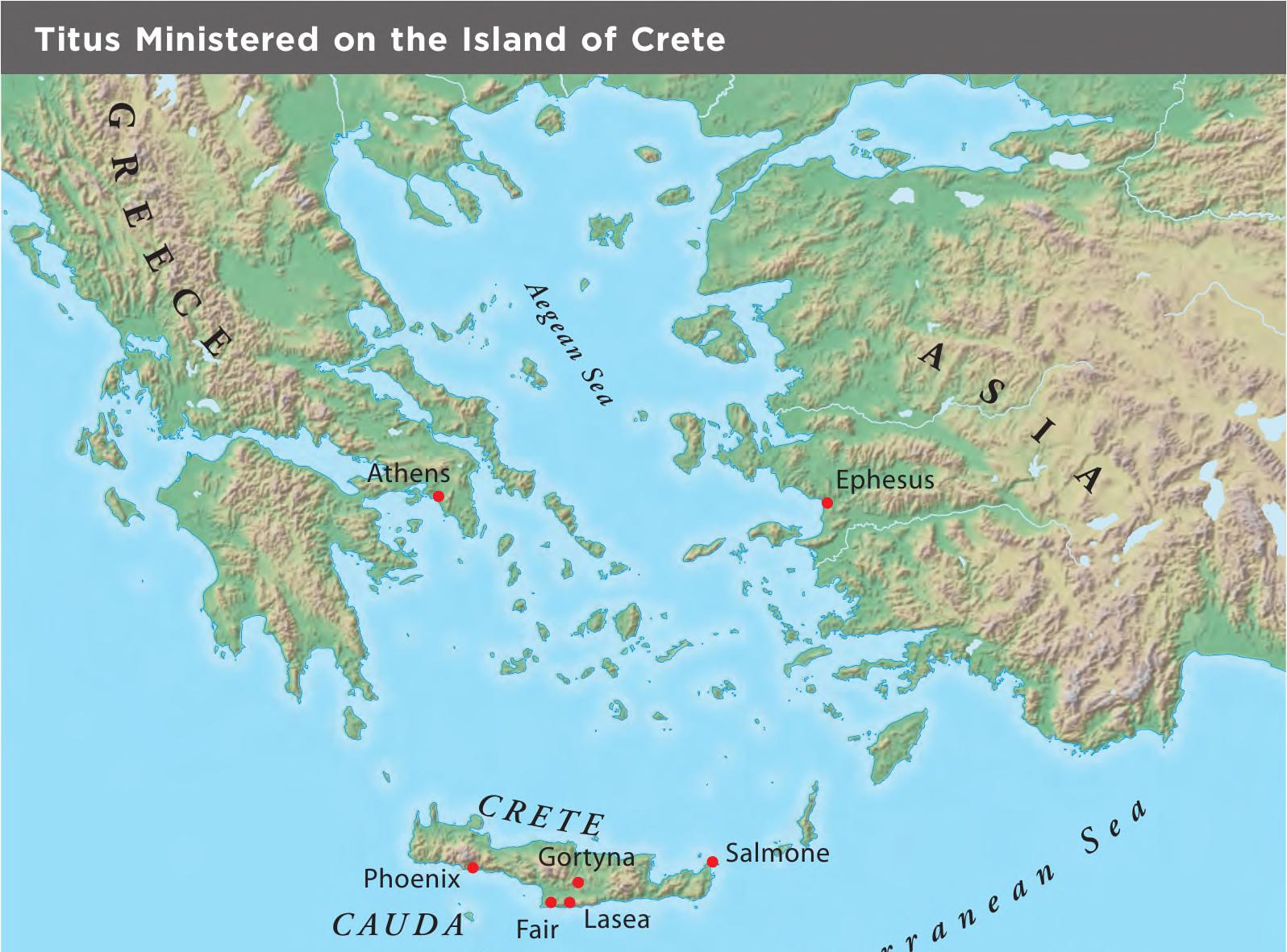
Titus Ministered on the Island of Crete
Original illustrations
End of source page 2005