PRINTED PAGE 1937NKJV · STUDY EDITION
2 Thessalonians INTRODUCTION 1937
In 2 Thessalonians, Paul stated emphatically that he had never taught that the
day of the Lord had already come. To counter false doctrine, Paul gave the Thes-
salonians a good dose of the truth, explaining to them the emergence of the man
of lawlessness and the prevalence of sin during the end times. Furthermore, he
reminded them they had been called by God and saved through Christ’s work. In
view of this fact, he exhorted them to stand firm in Christ (2:15) and to work hard
(3:12), always patiently waiting for Jesus’ return.
Christ in the Scriptures
Paul writes a second letter in an attempt to weed out the erroneous teaching in
the church in Thessalonica. He explains that the day of the Lord has not come and
gone; Jesus’ return is still pending. As in his first letter, Paul presents Jesus as the
joyful hope of all Christians. His eventual return will more than make up for the
persecution, suffering, and injustices we are currently anticipating or enduring.
Although the Lord’s presence will be worth it all for those who look for Him with
hope, His return has awesome and terrifying implications for those who refuse to
trust in His salvation (1:6–10; 2:8–12).
2 Thessalonians Outline
I. Encouragement to faithfulness in spite of persecution 1:1–12
A. Salutation 1:1, 2
B. Thankfulness for their faithfulness 1:3–5
C. Assurance of judgment on their persecutors 1:6–10
D. Prayer for their glorification 1:11, 12
II. Explanations concerning the day of the Lord 2:1–17
A. Correction of the false teaching that the day of the Lord had begun
2:1, 2
B. Evidence that the day of the Lord had not begun 2:3–12
C. God’s work in believers and the believers’ response 2:13–17
III. Exhortation to continued faithfulness to God 3:1–15
A. Desire for prayer and continued service for God 3:1–5
B. Idleness condemned 3:6–15
IV. Benediction of grace and peace 3:16–18
c. a.d. 47–49
Paul’s first
missionary
journey
c. a.d. 50
The Jerusalem
council
c. a.d. 50–53
Paul’s second
missionary
journey
c. a.d. 51
The church at
Thessalonica is
started
c. a.d. 51
1 Thessalonians is
written
c. a.d. 51–52
2 Thessalonians is
written
c. a.d. 53–57
Paul’s third
missionary
journey
c. a.d. 58
Paul is arrested in
Jerusalem
c. a.d. 60–62
Paul is imprisoned
in Rome
c. a.d. 67
Peter and Paul are
executed
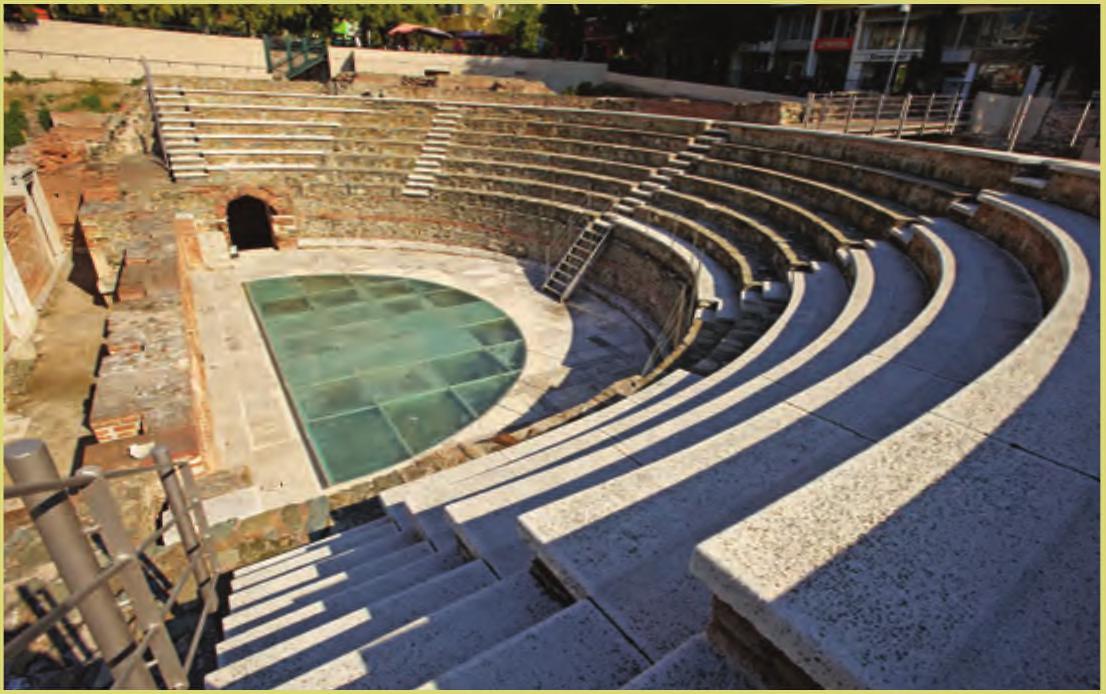
Thessalonian odeum, a smaller
theater where musicians and
orators performed
© vlas2000/Shutterstock
Original illustrations
End of source page 1972