PRINTED PAGE 161NKJV · STUDY EDITION
Leviticus INTRODUCTION 161
of the required sacrifices described in Leviticus were for the atonement of sins. On
the other hand, the voluntary sacrifices brought the people to fellowship and feast
with God, their family, and others.
The instructions in Leviticus were not given to the Israelites in order to help
them achieve their own salvation. Salvation can never be earned. It is always a gift
of God’s grace appropriated by faith. These instructions were given to a redeemed
nation so that its members would know how to maintain their fellowship with God.
The distinctions between clean and unclean and the various laws for holy living
promoted the Israelites’ own welfare and marked them out as a people separated
to God. Israel’s witness to God’s holiness and their visible well-being as a result of
holy living before Him would vividly demonstrate to their neighbors God’s power
and His care for His people. The directive found first in 11:44 and many times after-
ward clearly expresses this purpose for the laws: “You shall be holy; for I am holy.”
Modern Christians can learn much from Leviticus. The holiness of God, the
necessity of holy living, the great cost of atonement and forgiveness, the privilege
and responsibility of presenting only our best to God, the generosity of God that
enables His people to be generous—these are only some of the lessons. Leviticus
reveals the holiness of God and His love for His people in ways found nowhere
else in the Bible. Ultimately, Leviticus calls God’s people of all ages to the great
adventure of patterning life after God’s holy purposes.
Christ in the Scriptures
Leviticus is replete with types and allusions to the person and work of Jesus Christ.
The five offerings described in chapters 1–7 all point to Christ. The burnt offering
typifies Christ’s total offering in submission to His Father’s will. The grain offering
typifies Christ’s sinless service. The peace offering alludes to the fellowship that
believers have with God through the work of the Cross. The sin offering typifies
Christ as our guilt-bearer. The trespass offering pictures Christ’s payment for the
damage of sin.
Leviticus points vividly to Jesus. He alone is the spotless Lamb who can make an eternal and final payment for
sin. He alone is the perfect High Priest who can represent human rebels before the holy Judge of the universe.
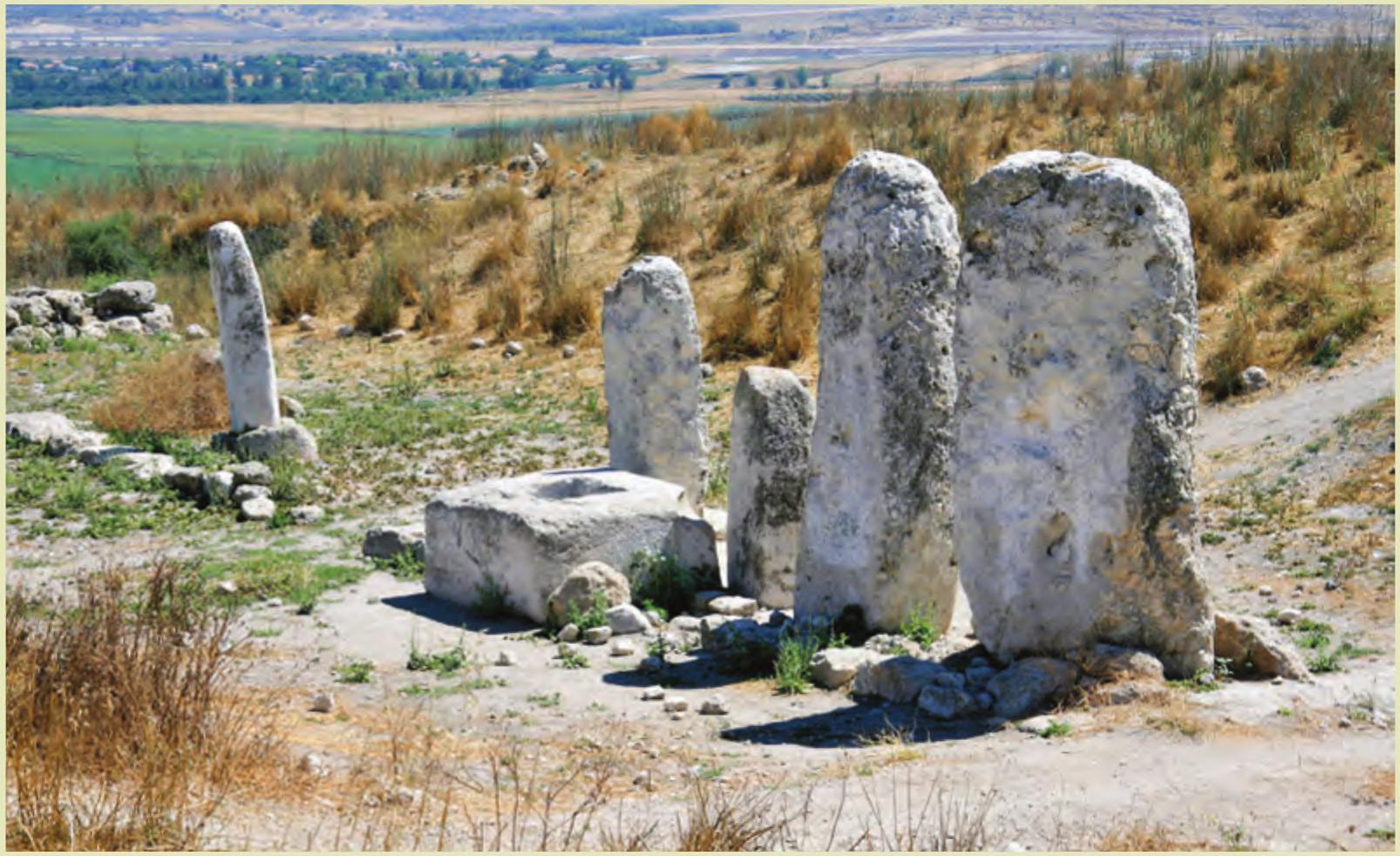
Standing stones on the summit of Gezer represent the type of sacred stones that Israelite law prohibited (Lev. 26:1).
www.HolyLandPhotos.org
c. 1730 b.c.
The Israelites are
enslaved in Egypt
c. 1527 b.c.
Moses is born
c. 1446 b.c.
The Israelites
escape from Egypt
c. 1445 b.c.
God gives the laws
of Leviticus
c. 1406 b.c.
40 years of
wilderness
wandering end
c. 1405 b.c.
The conquest of
Canaan begins
Original illustrations
End of source page 196