PRINTED PAGE 1903NKJV · STUDY EDITION
Philippians INTRODUCTION 1903
Acropolis
Traditional
prison
To Amphipolis
Egnatian Way
Baths
Agora
Forum
Hellenistic
sanctuary
Theater
To
Neapolis
Library
To Gangites River
Sanctuary
of Egyptian
divinities
N
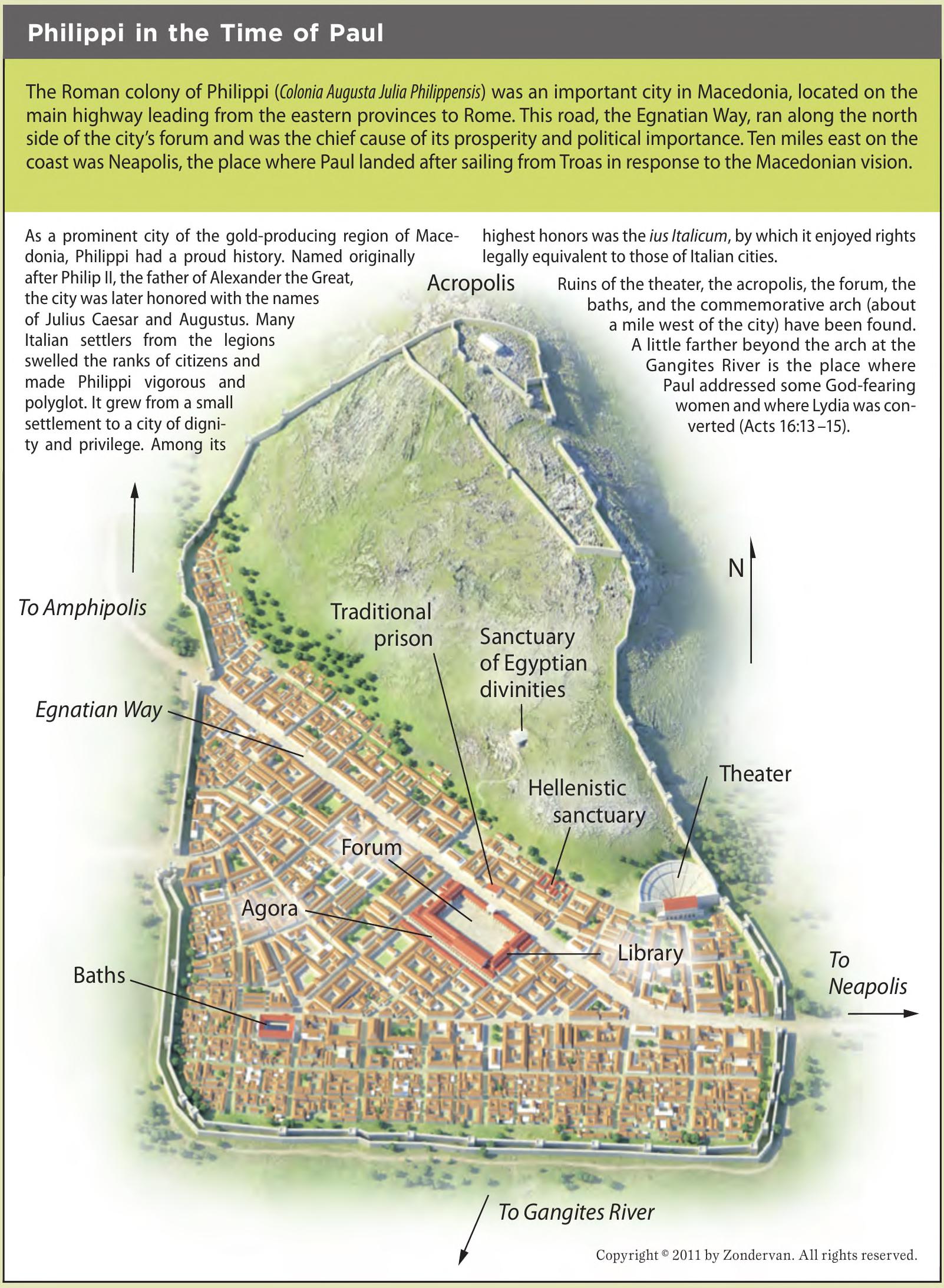
As a prominent city of the gold-producing region of Mace
donia, Philippi had a proud history. Named originally
after Philip II, the father of Alexander the Great,
the city was later honored with the names
of Julius Caesar and Augustus. Many
Italian settlers from the legions
swelled the ranks of citizens and
made Philippi vigorous and
polyglot. It grew from a small
settlement to a city of digni-
ty and privilege. Among its
highest honors was the ius Italicum, by which it enjoyed rights
legally equivalent to those of Italian cities.
Ruins of the theater, the acropolis, the forum, the
baths, and the commemorative arch (about
a mile west of the city) have been found.
A little farther beyond the arch at the
Gangites River is the place where
Paul addressed some God-fearing
women and where Lydia was con-
verted (Acts 16:13 –15).
The Roman colony of Philippi (Colonia Augusta Julia Philippensis) was an important city in Macedonia, located on the
main highway leading from the eastern provinces to Rome. This road, the Egnatian Way, ran along the north
side of the city’s forum and was the chief cause of its prosperity and political importance. Ten miles east on the
coast was Neapolis, the place where Paul landed after sailing from Troas in response to the Macedonian vision.
Copyright © 2011 by Zondervan. All rights reserved.
Philippi in the Time of Paul
Original illustrations
End of source page 1938