PRINTED PAGE 1868NKJV · STUDY EDITION
1868 | 2 CORINTHIANS 11:14
13 u Phil. 3:2; Titus
1:10
14 v Gal. 1:8
15 w [Phil. 3:19]
17 x 1 Cor. 7:6
19 y 1 Cor. 4:10
20 z 2 Cor. 1:24;
[Gal. 2:4; 4:3, 9; 5:1]
but Paul said they were transforming themselves. The word
means “to change in appearance,” “to disguise,” or “to masquerade.”
They were false teachers.
11:14, 15 And no wonder: If Satan, the prince of darkness, can
disguise himself as an angel of light, then his servants, the ministers
of evil, can disguise themselves as ministers of righteousness.
Satan’s main tool is deception.
11:16 Also indicates that his opponents were boasting.
11:17 Not according to the Lord means “not according to the
Lord’s standard.” This kind of boasting was not characteristic of the
Lord. Jesus Christ was an example of humility, not boasting (Phil.
2:5–11).
11:18 The false apostles were boasting according to the flesh,
that is, they measured themselves by their own standards rather
than by God’s. Unfortunately, the Corinthians were listening to them
(vv. 19, 20).
fool. If otherwise, at least receive me
as a fool, that I also may boast a little.
17 What I speak, x I speak not according
to the Lord, but as it were, foolishly, in
this confidence of boasting. 18 Seeing that
many boast according to the flesh, I also
will boast. 19 For you put up with fools
gladly, y since you yourselves are wise!
20 For you put up with it z if one brings
you into bondage, if one devours you, if
one takes from you, if one exalts himself,
apostles, u deceitful workers, transform
ing themselves into apostles of Christ.
14 And no wonder! For Satan himself
transforms himself into v an angel of
light. 15 Therefore it is no great thing if
his ministers also transform themselves
into ministers of righteousness, w whose
end will be according to their works.
Reluctant Boasting
16 I say again, let no one think me a
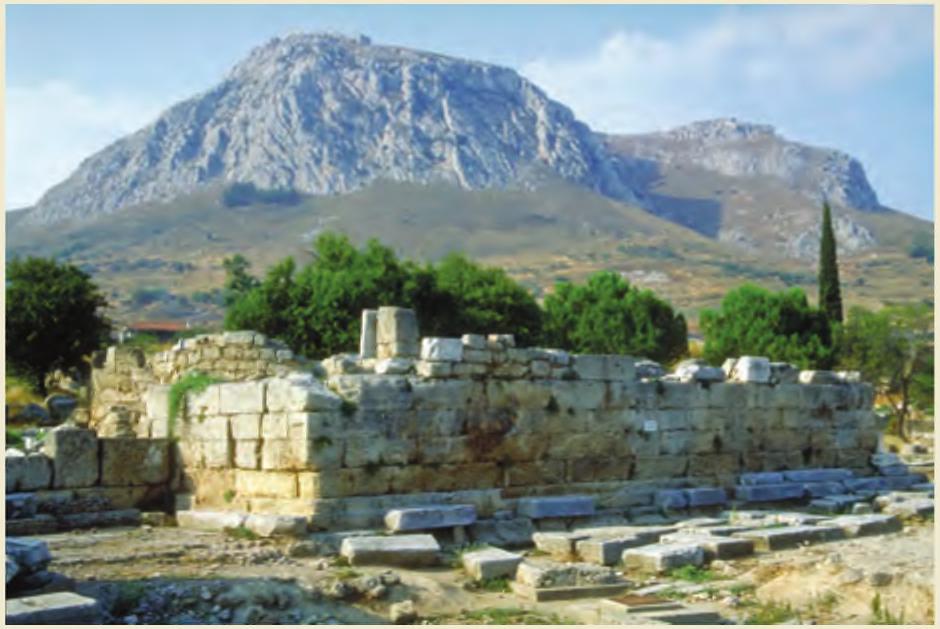
According to Acts 18:12 – 17 Paul was brought before Gallio and
accused by the Jews of inciting others to “worship God contrary to the
law.” It is possible that Gallio judged the case from this “bema.” Paul
was often defending his ministry from Jews and false teachers alike.
© 1995 by Phoenix Data Systems
Paul’s Defense
“I speak as a fool” (11:23). These words jump out of the pages of 2 Corinthians; they seem out of place in the Bible. Why
would an apostle speak foolishly? A closer look reveals the reason behind Paul’s words. The church at Corinth had been
infiltrated by insidious false teachers. Although no one knows what philosophical or theological group these false teach-
ers belonged to, we can ascertain some of their beliefs from Paul’s two letters to the Corinthians. Evidently they were a
group who prided themselves on their Jewish heritage (11:22). This group may also have held to what some have called
an “incipient Gnosticism.” They placed value on spiritual knowledge and experiences (1 Cor. 8:1) that were only accessible
to gifted teachers, perhaps those who were especially skilled in Greek rhetoric (11:6). These “false teachers” were not only
slandering Paul, they were denying his authority (12:11) and the truthfulness of what he preached. Some have postulated
that there were several different groups that opposed Paul. That may have been the case, for Paul speaks of several dif-
ferent factions in the church (1 Cor. 1:12, 13).
To counter the accusations of his opponents, Paul took great pains to present his apostolic credentials. He opened his
life and ministry for all to review. But he was doing more than defending himself; the great apostle wrote with an additional
goal in mind. This was to warn the Corinthians of the dangers the false teachings posed. Thus Paul reluctantly painted a
stark contrast between his own ministry and that of his rivals. According to Paul, these false teachers preached “another
Jesus” and a “different gospel” (11:4). He regarded them as “deceitful workers” (11:13). Unlike Paul, these impostors collected
fees for their services (11:7–9). And unlike Paul, they enjoyed comfortable, easygoing ministries. To defend himself, Paul
was forced to “boast” in his ministry. But his boast was unusual, for it was in his weaknesses and suffering. He did not boast
of his own accomplishments, but in the troubles and difficulties that clearly showed the power of Christ in his life (12:9).
Many centuries later, the cast of characters
has changed, but the story remains the same.
The church continues to be infiltrated by those
who advocate unbiblical ideas. Many of these
present-day “false teachers” appear to be very
sincere. They speak with great passion and
eloquence. Their ideas seem to make perfect
sense. But we must exercise extreme caution.
The lucrative potential of modern mass commu-
nications has attracted hucksters who tickle the
“itching ears” (2 Tim. 4:3) of their audiences in
an attempt to profit personally. Every message
must be weighed against the Word of God.
And what is a church body to do if it detects
false teachers in its midst? On this issue, the New
Testament is clear: Those who foster division
within the church by persistently advocating
unbiblical beliefs are to be removed from fel-
lowship (6:14; Rom. 16:17, 18; 1 Tim. 6:3–5; Titus
3:9–11; 2 John 9–11). There is to be no toleration.
When unaddressed, false doctrine is like a can-
cer that permeates a body, weakening it, and
ultimately bringing about its demise.
Original illustrations
End of source page 1903