PRINTED PAGE 1794NKJV · STUDY EDITION
1794 Romans INTRODUCTION
The implication is that Paul planned to sail for Judea directly from Corinth. Phoebe also, a fellow believer,
was about to leave Corinth for Rome. She was presumably the bearer of the letter from Paul to the Romans.
Since practically all navigation on the Mediterranean Sea ceased after November 11 and was not resumed again
until March 10, Romans was likely written in the fall of a.d. 57.
A plot by the Jews, however, changed Paul’s travel plans. Instead of taking a ship from Corinth, he went
through Macedonia by foot (Acts 20:3) and eventually left for Jerusalem from Philippi the next spring (Acts 20:6).
Little did Paul know that his eventual arrival in Rome would be in captivity (Acts 28:17–31).
Purpose All of Paul’s other letters arise from a particular occasion and have a definite purpose. Romans is
different; from the content it seems to have a much more general didactic aim. Having said this, it is possible
to see at least three purposes Paul had in writing the book.
His first purpose was to prepare the Romans for his planned journey to Rome and later to Spain. His immedi-
ate itinerary involved a trip to Jerusalem, but his vision was toward the west. He clearly suggests that he expects
assistance from them in his endeavor to carry the gospel to Spain (15:24). But if that had been his only purpose,
a brief note would have been enough. Obviously Paul had more in mind.
A second purpose involved Paul’s understanding that the believers needed to “be established” (1:11). Paul
wanted to give them a well-instructed faith. His letter is a kind of syllabus of Paul’s apostolic teaching. Romans
is a masterful presentation of God’s plan of salvation for Jews and Gentiles.
The third purpose for the letter was pastoral. Paul wanted to exhort Jewish and Gentile believers to live in
harmony. As in most of the early churches, the gospel brought different groups of people together who other
wise would have stayed apart, whether for reasons of nationality, status, or culture. Once they came together
under one roof, the challenge was to preserve their oneness in Christ. Thus throughout the letter, Paul deals with
problems arising from Jewish and Gentile differences. He emphasizes what everyone shared. Since there is only
one God, He is the God of both Jew and Gentile. Both groups are under sin (3:9), and both are saved through
faith (3:30). This theme of Jew and Gentile living together surfaces most clearly in chapters 14 and 15, where
Paul deals with the practical aspects of being together in one body. Paul hammers home his central theme: The
righteous God justifies and ultimately glorifies both Jew and Gentile by grace through faith.
Theology Romans includes the most systematic presentation of theology found anywhere in Scripture. It
explains the meaning of the Cross for the believer’s life. While expounding why Jesus died for all of humanity,
Paul clarifies the core concepts of the Christian faith: sin and righteousness, faith and works, justification and
election. The letter contains (1) a detailed description of the sinfulness of man (1:18—3:20); (2) an extensive
discussion of justification by faith (3:21—5:11), including a clear interpretation of the death of Christ (3:24–26);
(3) an elaborate explanation of sanctification (5:12—8:39); (4) a strong section on the doctrine of election (9:1–29);
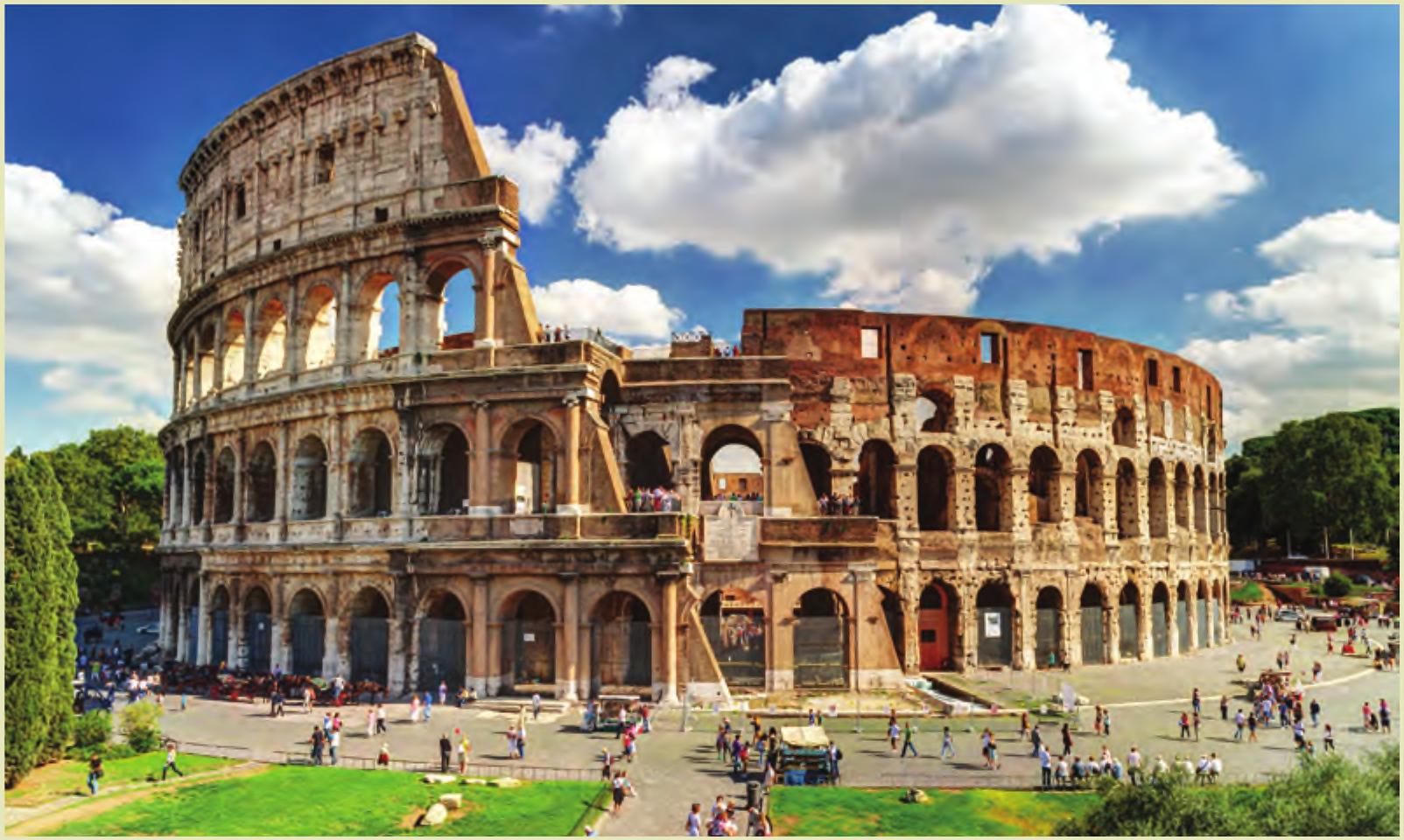
The Colosseum in Rome, one of the most impressive reminders of the might of the Roman Empire
© Viacheslav Lopatin/Shutterstock
Original illustrations
End of source page 1829