PRINTED PAGE 1461NKJV · STUDY EDITION
Zephaniah 3:12 | 1461
7 f Jer. 8:6 g Gen.
6:12 3 They were
eager
8 h Prov. 20:22; Mic.
7:7; Hab. 2:3 i Is.
66:18; Ezek. 38:14-
23; Joel 3:2; Mic.
4:12; Matt. 25:32
j Zeph. 1:18 4 LXX,
Syr. for witness;
Tg. for the day of
My revelation for
judgment; Vg.
for the day of My
resurrection that is
to come
9 k Is. 19:18; 57:19
5 Lit. lip
10 l Ps. 68:31; Is.
18:1; Acts 8:27
11 m Is. 2:12; 5:15;
Matt. 3:9
12 n Is. 14:32; Zech.
13:8, 9
3:8 the fire of My jealousy: God’s response to the wickedness of
Jerusalem was to declare His judgment. He would use other nations
to punish the city for its rebellion.
3:9–13 The focus of the text moves to a time of national regener-
ation and restoration. Pure language refers to language used in
the pure worship of God. One day human language will become a
unifying element in the true worship of God. My worshipers: God’s
people would come from all nations to worship Him.
9 “ For then I will restore to the peoples
k a pure 5 language,
That they all may call on the name of
the LORD,
To serve Him with one accord.
10 l From beyond the rivers of Ethiopia
My worshipers,
The daughter of My dispersed ones,
Shall bring My offering.
11 In that day you shall not be shamed
for any of your deeds
In which you transgress
against Me;
For then I will take away from your
midst
Those who m rejoice in your pride,
And you shall no longer be haughty
In My holy mountain.
12 I will leave in your midst
n A meek and humble people,
7 f I said, ‘Surely you will fear Me,
You will receive instruction’—
So that her dwelling would not be
cut off,
Despite everything for which I
punished her.
But 3 they rose early and g corrupted
all their deeds.
A Faithful Remnant
8 “ Therefore h wait for Me,” says the
LORD,
“ Until the day I rise up 4 for plunder;
My determination is to i gather the
nations
To My assembly of kingdoms,
To pour on them My indignation,
All My fierce anger;
All the earth j shall be devoured
With the fire of My jealousy.
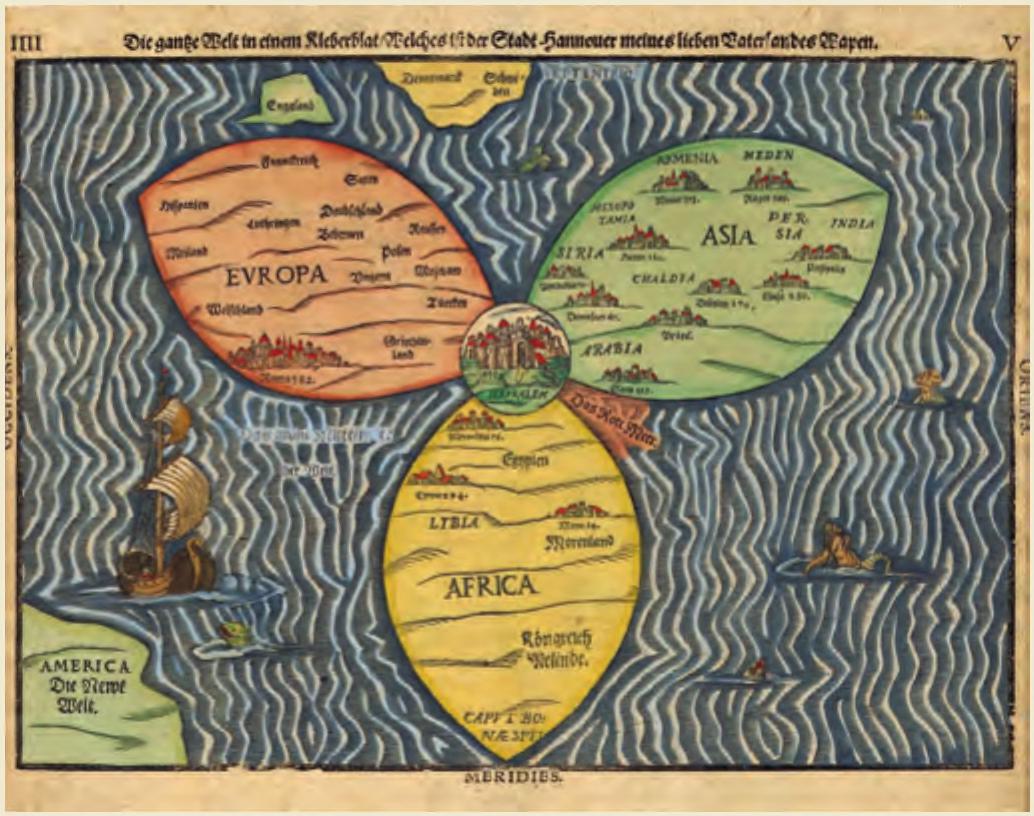
A sixteenth-century map showing Jerusalem at its center. Zephaniah knew
even less about the world, and “beyond the rivers of Ethiopia” was literally
“off the map.”
Wikimedia Commons
Beyond the Rivers of Ethiopia
Christians of African descent may be interested in Zephaniah’s prophecy that the Lord would restore His “dispersed ones”
from “beyond the rivers of Ethiopia” (3:10). This was a remarkable promise, given the map of the world in Zephaniah’s day.
As far as we know, Ethiopia represented the southwestern limits of Judah’s knowledge of the world. The interior of
Africa, “beyond the rivers of Ethiopia,” was literally “off the map” for the ancient Israelites. It was uncharted territory for
them.
To what, then, was Zephaniah referring? The context shows that he was anticipating the day when the Lord would
bring people from the ends of the earth to form a holy people who would worship and serve Him with true hearts (3:9,
12, 13). Among them would be people from “beyond the rivers of Ethiopia.”
The prophet called this new people
“the daughter of My dispersed ones”
(3:10) and “the remnant of Israel” (3:13).
Thus Zephaniah’s vision seems to tie in
with Jeremiah’s predictions of a scatter-
ing of the Jews throughout the world,
followed by an eventual restoration (Jer.
30:10, 11, 18–22; 31:1–40).
Beginning in the sixth century, many
Jewish colonies were established along
the Nile and the Mediterranean coast of
Africa. In fact, some have suggested that
Zephaniah’s prophecy pertains to the
Jewish community in northern Abyssinia.
However, the prophecy may look beyond
a strictly Jewish restoration. It seems to
correspond with a prediction by David
that Ethiopians would someday “stretch
out [their] hands to God” (Ps. 68:31).
As far as we know, Zephaniah him-
self had no idea of the vast tribes of peo-
ple living “beyond the rivers of Ethiopia.”
But every time one of their descendants
turns to faith in Christ, Africa adds one
more member to the “peoples [of] a
pure language” who are called to serve
the Lord “with one accord” (Zeph. 3:9).
Original illustrations
End of source page 1496