PRINTED PAGE 1403NKJV · STUDY EDITION
Amos INTRODUCTION 1403
When it was written, Amos’s prophecy was dated to a time “two years before the earthquake” (1:1). It is
impossible to tell what earthquake is meant, since there are no other historical references to it. However, this
dating, along with Amos’s dialogue with Amaziah, the priest of Jeroboam’s temple at Bethel (7:10–17), reveals
that the period of Amos’s prophetic activity was very short, unlike many of the other prophets. Amos went
to Bethel from Tekoa, delivered his prophetic oracles, and returned home. He probably stayed in Bethel only
a few days. Amos’s spoken oracles should be dated around 755–754 b.c. Within two or three years after the
prophet’s appearance at Bethel, Jeroboam II died, and Israel’s rapid decline began. Within 30 years, Israel was
conquered by the Assyrians.
Theme and Purpose The main theme of the Book of Amos is God’s passionate concern for justice. Justice
is not an abstract issue with God. Instead, justice is relational; it promotes good relations between people and
between groups of people. Injustice breaks down good relationships and breeds anger, hostility, and violence.
God created the human race to enjoy good relations with Him and with each other; therefore, injustice that
breeds alienation in all of its varieties breaks God’s heart.
The renewed prosperity of Israel based on the successes of Jeroboam II brought new wealth to the upper
classes. They used that wealth to enlarge their landholdings and to build great houses for themselves. They
violated the rights of the poor and the landed peasants, throwing many off their ancestral lands. Through God’s
provisions in the Mosaic covenant, the landed peasant class had been the foundation of Israel’s society. But
under Jeroboam’s rule, this class virtually disappeared. As the rich became richer, the poor became poorer and
more numerous; many were sold into slavery. Israel’s social structure became thoroughly unstable.
The immediate purpose of Amos’s prophetic ministry was to call the leaders of ancient Israel to repent and
reform. Amos warned them that if they did not heed his call, their injustice against the poor and the weak would
destroy the nation. God would not allow them to continue in their unrighteous, unjust course. Repentance or
retribution were the only alternatives. It is no accident that what we often remember from Amos is his stirring
call, “Let justice run down like water, and righteousness like a mighty stream” (5:24).
Christ in the Scriptures
Though most of Amos’s prophecy is about God’s authority to judge an apathetic and ungrateful nation, he
ends his book with the promise that God will restore His people and “raise up the tabernacle of David” (9:11).
This obviously refers to more than just the kingdom of David and the temple his son Solomon built. It speaks
of the fulfillment of the Davidic dynasty, which finds its focus in the Son of David—Jesus.
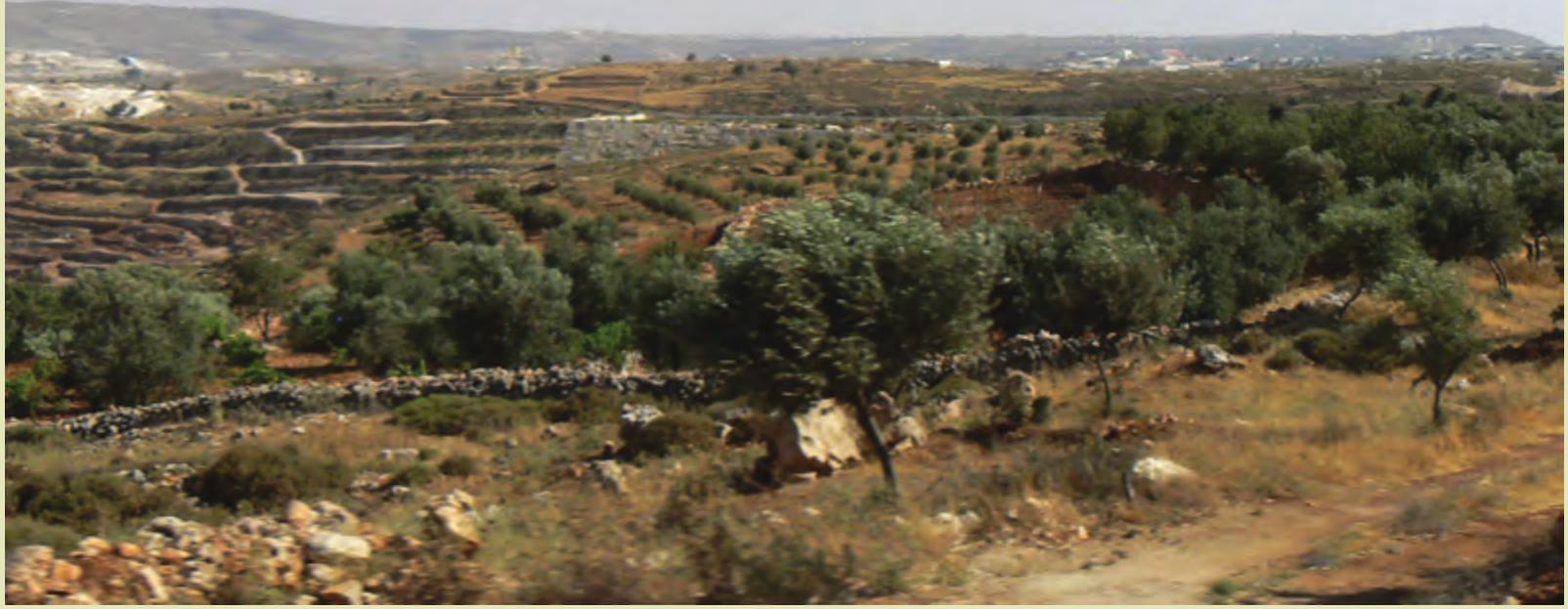
A view of Tekoa, located ten miles south of Jerusalem. Amos was a shepherd from Tekoa (Amos 1:1).
Kim Walton
Original illustrations
End of source page 1438