PRINTED PAGE 1377NKJV · STUDY EDITION
Hosea INTRODUCTION 1377
on a pro-Assyrian policy that facilitated the Assyrian takeover of the Palestinian states, reduced Judah to vassal
status, and drained the nation’s economic wealth.
Literary Structure The Book of Hosea fluctuates between judgment and salvation. Each of the book’s five
major sections begins on a sour note but concludes with a positive affirmation of God’s commitment to His
people and the expectation that He will restore them.
As a prophet and a poet, Hosea uses an arsenal of rhetorical and poetic techniques to communicate his
message in a memorable and persuasive manner. He uses a variety of metaphors as he depicts a broad range
of themes, including God’s anger, judgment, devotion, and love, as well as Israel’s waywardness and stubborn-
ness. Hosea employs images that were familiar to his contemporaries, drawing extensively from agriculture
and nature. Hosea paints some of the most moving, terrifying, and exhilarating word pictures in all of the Bible.
Purpose and Major Themes Hosea’s purpose was to denounce sin, to warn of impending judgment, and
to assure the faithful that God’s love would win out in the end. Israel, the northern kingdom, is the primary focus
of Hosea’s prophecy. Hosea accused the nation of being unfaithful to its vows, just as his own adulterous wife
had been unfaithful to her vows. By participating in the pagan fertility rites of Baalism, the people violated their
covenant with the Lord. The Lord did not tolerate this rebellion and was prepared to bring against Israel the
judgments threatened in the covenant (see Deut. 28:15–68). God’s purpose, however, was not entirely punitive;
He intended these severe judgments to bring the nation to its senses. Hosea proclaimed that the Lord would
eventually restore His marriage with His people and again pour His blessings upon them.
Israel’s covenant relationship with God is at the heart of Hosea’s message. God delivered His people from
slavery in Egypt, established them as a nation, and took great delight in them. He looked for a favorable response
to His love and obedience to the
commandments He had given
to regulate the people’s worship
and daily activities. However, the
people were ungrateful, turning to
other gods, violating the religious
and social standards of God’s cov-
enant, and forming alliances with
surrounding nations.
When God establishes a bind-
ing relationship, He demands
absolute loyalty. Through Hosea,
God announced that He would use
severe judgment to free His peo-
ple from their spiritual stupor and
get their attention. This judgment
would take the forms of drought,
invasion, and exile.
Though the severity of God’s
judgment might give the impres-
sion that Israel had been aban-
doned forever, God intended to
restore His people. When they
repented of their sins, He would
return them to their land, reunite
the north and south under an ideal
Davidic king, and restore His rich
blessings.
The Book of Hosea gives us a
clear and balanced picture of God.
He loves His people and desires an
intimate and vibrant relationship
with them. He is jealous of their
affections and tolerates no rivals.
When they sin, He will discipline
them as severely as is necessary.
While God’s jealousy may seem
inappropriate and His discipline
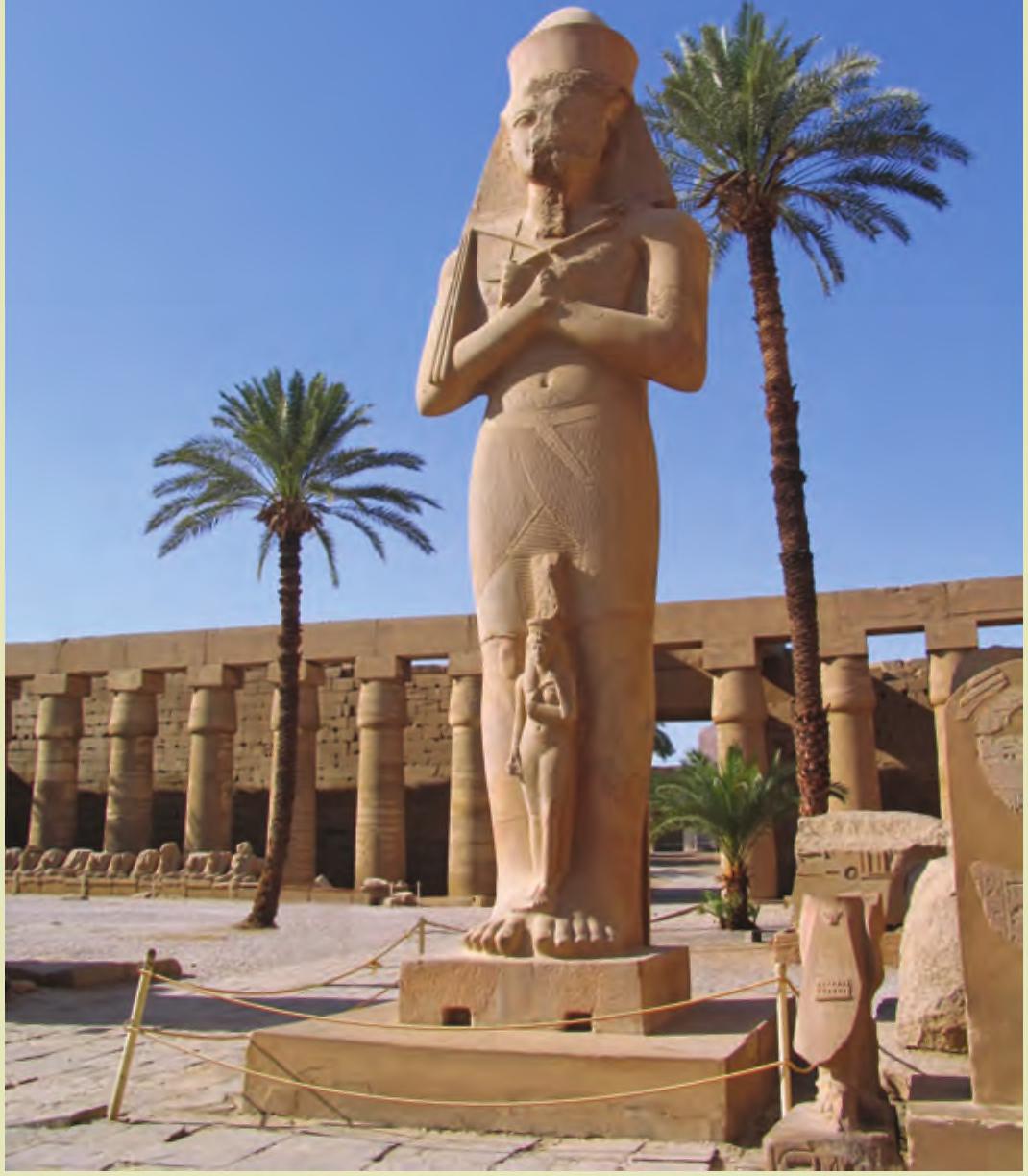
Subordinate status of a wife in the ancient Near East is depicted here in a
statue of Rameses II and a miniature version of his wife.
© snowturtle/Shutterstock
Original illustrations
End of source page 1412