PRINTED PAGE 1255NKJV · STUDY EDITION
Lamentations INTRODUCTION 1255
is a prayer that begins with “Remember,
O Lord” (5:1) and ends with “Turn us back
to You, O Lord” (5:21). In this way, Jere-
miah’s lament moves from mourning to
praise and then from praise to a prayer
for restoration.
The poetry of the book enhances
its purpose and structure. Chapters 1
through 4 are composed as acrostics of
the 22 letters of the Hebrew alphabet.
Each verse or group of verses begins with
a word whose initial letter carries on the
sequence of letters in the Hebrew alpha-
bet. This would be similar to an English
poem in which the first line begins with
A; the second line begins with B, and so
on. One purpose of this device was prob-
ably to aid in memorization of the pas-
sage. The acrostic also suggests that the
writer has thought things through and is
giving a complete account of the subject.
Theological Significance Like the Book of Job, the Book of Lamentations addresses human suffering.
Unlike Job, Lamentations focuses on national suffering—specifically, the suffering of Judah. Along the way,
the book tackles some of the toughest questions faced by God’s people: How can God’s love and justice be
reconciled with our pain? If God is in control of history, how could a nation suffer so much so soon after it had
been led by such godly leaders as King Josiah and those involved in that revival? Where was God during His
people’s unhappiest hour?
The Book of Lamentations offers some very practical theological reflections on the purposes and results of
suffering. Rather than explaining away pain, the book helps us face pain. By avoiding cheery clichés, the Book
of Lamentations provides companionship for those who are suffering and plants seeds of hope for rebuilding
after the suffering is over.
In fact, the anger of God is a sign that He cares. The Lord’s anger is never capricious or unreasonable. His
discipline is a sign that He has not abandoned us. Even in His display of anger, God is still full of mercy and grace.
The beacon light in the midst of disintegration is found in 3:22–24. Come what may, God remains faithful. His
faithfulness is the greatest comfort to those who suffer; His compassions are new every morning.
Christ in the Scriptures
In his mournful lyrics Jeremiah does more than focus on his feelings. His vulnerable grief focuses our attention
on the One who is to come. This weeping prophet is a type of Jesus. Six centuries later, the Son of God weeps
over the same city. “O Jerusalem, Jerusalem, the one who kills the prophets and stones those who are sent to
her! How often I wanted to gather your children together, as a hen gathers her chicks under her wings, but you
were not willing! See! Your house is left to you desolate” (Matt. 23:37, 38).
This tear-stained prophet also provides an accurate description of the one Isaiah called “a Man of sorrows
and acquainted with grief” (Is. 53:3). Jeremiah speaks of the Messiah being afflicted (1:12; 3:19), despised, and
derided by His enemies (2:15, 16; 3:14, 30).
Lamentations Outline
I. Grief after the destruction of Jerusalem 1:1–22
II. Personal suffering after the destruction of Jerusalem 2:1–22
III. Hope in the face of adversity 3:1–66
IV. The pain of the destruction of Jerusalem 4:1–22
V. Remembering that God still reigns 5:1–22
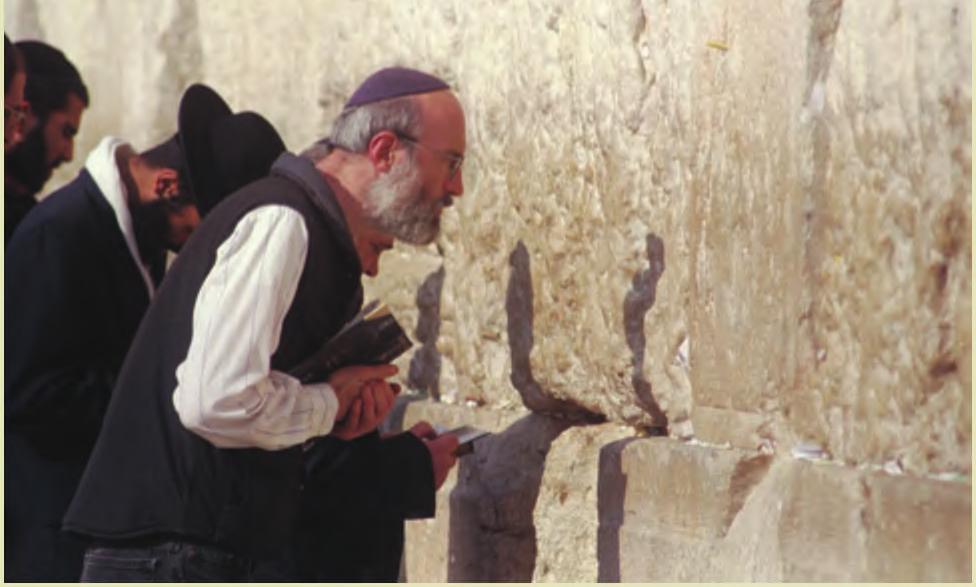
Jews still pray and weep over their holy city at the “Wailing Wall” in
Jerusalem. The “Wailing Wall,” or Western Wall, is a remnant of the
ancient wall that surrounded the Jewish temple’s courtyard, dating
back to the Second Temple period.
© William D. Mounce
Original illustrations
End of source page 1290