PRINTED PAGE 1243NKJV · STUDY EDITION
Jeremiah 49:29 | 1243
49:23–25 Hamath and Arpad were major towns located west and
north of the capital of Damascus.
49:28 The region of Kedar was the most important Arab tribal
group in the biblical period. Kedar was in northern Arabia and was
known for its sheepherding and merchant caravans (see 2:10; Is.
60:7; Ezek. 27:21). The phrase men of the East is associated with
the Arameans, Midianites, Amalekites, and other nomadic desert
tribes (see Gen. 29:1; Judg. 7:12).
49:29 The various items listed in this verse are typically those of
nomadic peoples. The panic-filled shout, fear is on every side, is
common in Jeremiah’s oracles (6:25; 20:10; 46:5; 49:5).
23 l Is. 17:1-3; Amos
1:3, 5; Zech. 9:1, 2
m Jer. 39:5; Zech.
9:2 n [Is. 57:20]
9 anxiety
24 o Is. 13:8; Jer.
4:31; 6:24; 48:21
1 childbirth
25 p Jer. 33:9
26 q Jer. 50:30;
Amos 4:10
27 r Amos 1:4
28 s Gen. 25:13;
Ps. 120:5; Is. 21:16,
17; Jer. 2:10; Ezek.
27:21 t Judg. 6:3;
Job 1:3
29 u Ps. 120:5 v Jer.
46:5
27 “ I r will kindle a fire in the wall of
Damascus,
And it shall consume the palaces of
Ben-Hadad.”
Judgment on Kedar and Hazor
28 s Against Kedar and against the king-
doms of Hazor, which Nebuchadnezzar
king of Babylon shall strike.
Thus says the LORD:
“ Arise, go up to Kedar,
And devastate t the men of the East!
29 Their u tents and their flocks they
shall take away.
They shall take for themselves their
curtains,
All their vessels and their camels;
And they shall cry out to them,
v ‘ Fear is on every side!’
Judgment on Damascus
23 l Against Damascus.
m “ Hamath and Arpad are shamed,
For they have heard bad news.
They are fainthearted;
n There is 9 trouble on the sea;
It cannot be quiet.
24 Damascus has grown feeble;
She turns to flee,
And fear has seized her.
o Anguish and sorrows have taken her
like a woman in 1 labor.
25 Why is p the city of praise not
deserted, the city of My joy?
26 q Therefore her young men shall fall in
her streets,
And all the men of war shall be cut
off in that day,” says the LORD
of hosts.
Bible Times & Culture Notes
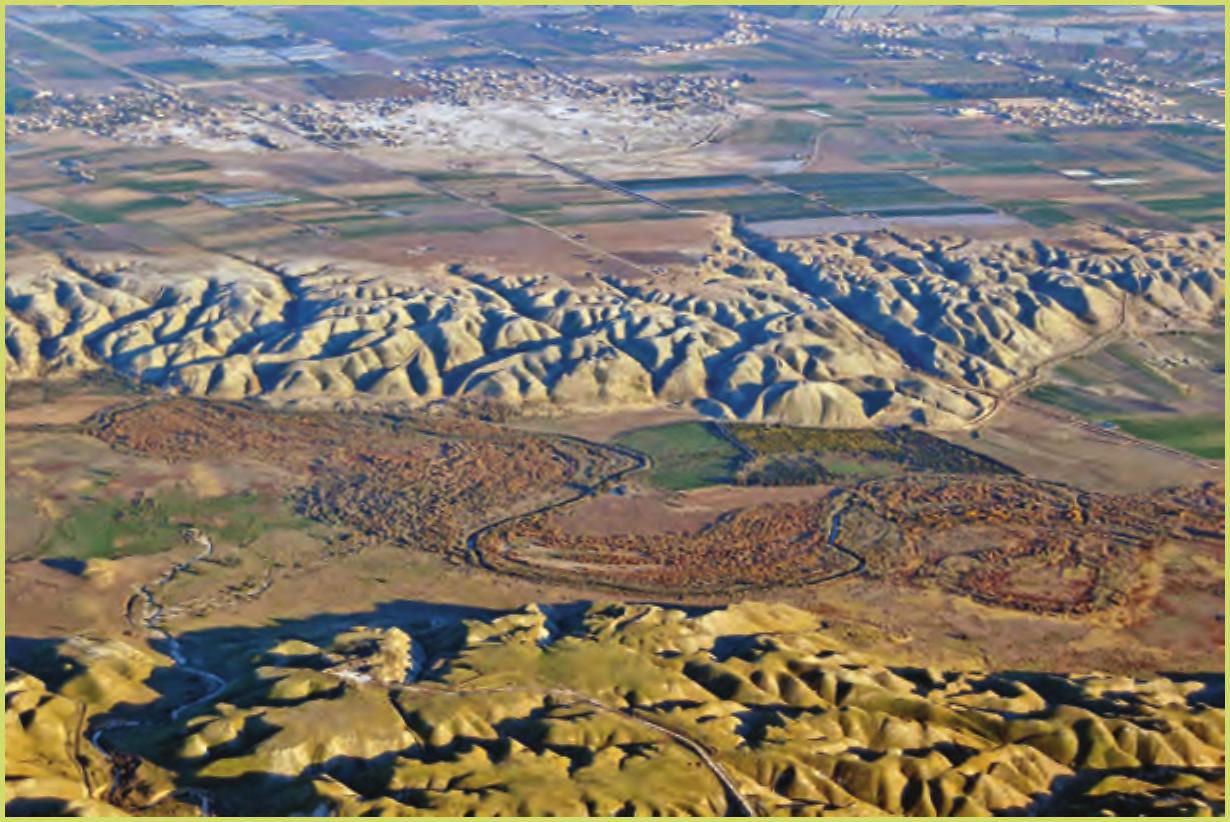
The Lower Jordan Valley
The Lower Jordan Valley contains three distinct levels known as the zor, the qattara, and the ghor. The zor is a narrow strip
of land one or two miles wide, which the Bible calls the “floodplain of the Jordan” (49:19). Thanks to seasonal floods, the
zor is a jungle of dense brush, shrubs, and tamarisk trees. The sons of the prophets were cutting down trees here when
Elisha recovered an ax head (2 Kings 6:1–7).
Away from the river is the qattara. This territory is covered by ancient deposits of sediment from the lake that once
filled the Jordan Valley. Seasonal streams carve deep crevices. No one grew crops there because the soil was salty. Modern
Israeli scientists are reclaiming the soil by washing it with river water.
The ghor is a steep but fertile terrace between the qattara and the mountains. Farmers irrigate and cultivate these
fields.
Aerial view of
the Lower Jordan
Valley. Note the
zor, the qattara,
and the ghor.
Todd Bolen/www.
BiblePlaces.com
Original illustrations
End of source page 1278