PRINTED PAGE 91NKJV · STUDY EDITION
Exodus INTRODUCTION 91
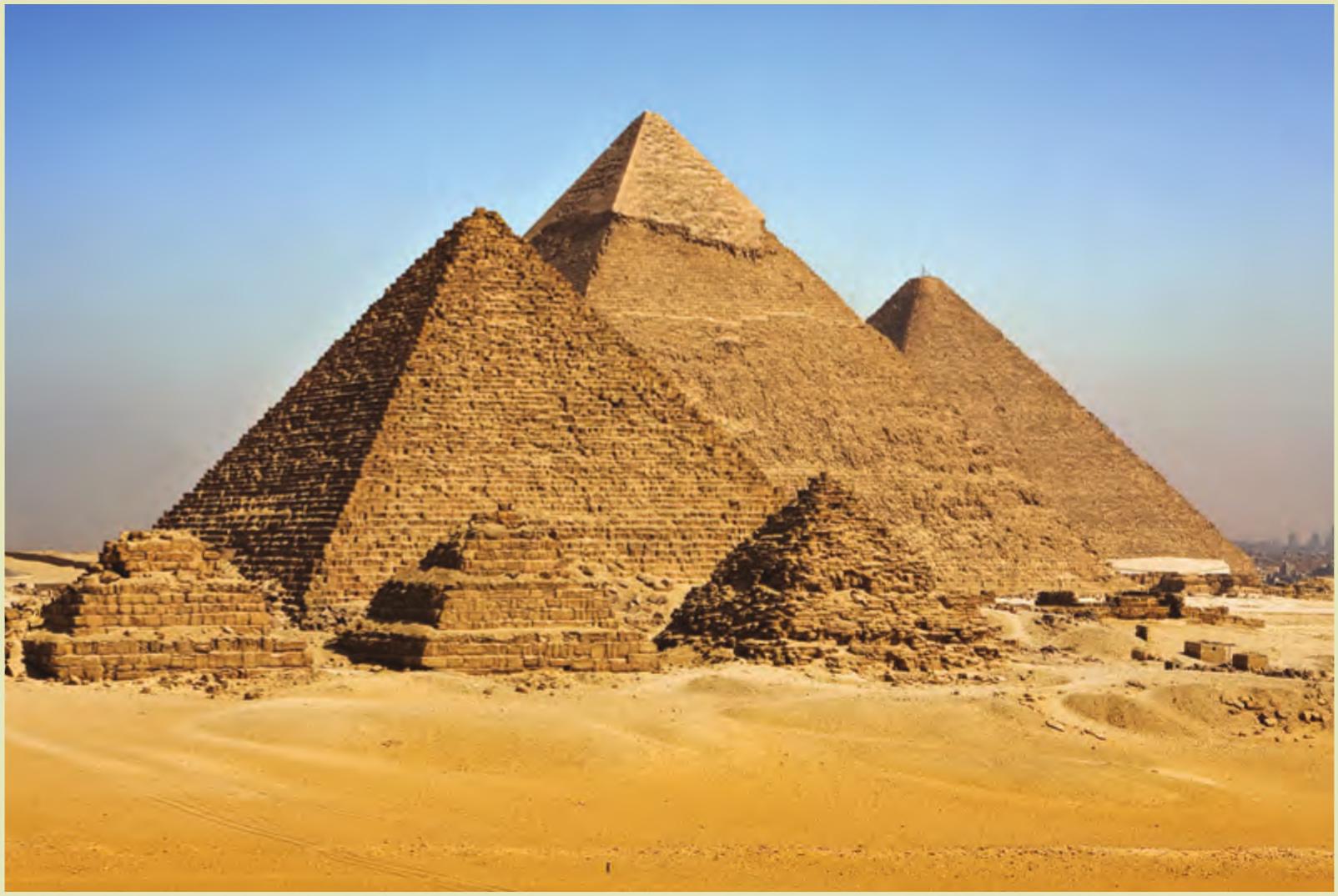
The Giza Pyramids
© WitR/Shutterstock
ancient world—Pharaoh’s court. In this royal court and later in the Midianite wilderness, God shaped Moses
into an instrument for saving His people, the Israelites, from slavery. Then at the chosen time, God sent Moses
and Aaron to confront Pharaoh, the Israelites’ oppressor. The miraculous signs and plagues displayed in this
dramatic encounter demonstrated God’s power over the supposed gods of Egypt—especially Pharaoh, who
claimed he was an incarnate deity. Since Pharaoh had attempted to destroy God’s firstborn son (the people of
Israel; see 4:22, 23), the Lord, in the tenth plague, destroyed the Egyptians’ firstborn sons. But the Lord passed
over or saved the firstborn sons of the Israelites because they were His people and had obeyed His instructions
concerning the Passover Feast (ch. 12). With this tenth plague, the Lord saved His people from slavery. At the
Red Sea, God saved them again—this time from the power of the Egyptian army (see 12:31–42; 13:17—15:21).
The enslaved people were free! God was their Savior!
Not only did God save these slaves, He provided for them. When the Israelites left Egypt, God prompted the
Egyptians to give them all kinds of goods (12:36). Then in the wilderness He turned bitter waters sweet (15:22–27),
gave manna from heaven (ch. 16), and brought water from a rock (17:1–7). Yet even with these miraculous
provisions, the Israelites murmured and complained. They had barely finished singing the praises of the Lord
(15:1–21) when they begin to murmur against His goodness (15:24). When would they trust in God their Provider?
The second section of the Book of Exodus is a series of detailed laws and instructions (chs. 19–40). However,
these laws are no ordinary laws. They reveal the very character of God. They reveal God as a Lawgiver and as
the Holy One.
This second section of Exodus records God’s benevolent laws given in the context of a treaty with the
Israelites. The Hebrew word translated law always has a positive meaning—“instruction.” The law is like an out-
stretched finger, pointing out the direction a person should take in life. In the Ten Commandments (20:1–17), God
mercifully pointed out His way to His people—the way to life. But benevolent instruction was only part of God’s
plan for the Israelites. His larger plan was to establish a relationship with them based on a formal treaty (ch. 20).
Exodus concludes with instructions about the tabernacle—its construction, furnishing, and services. Many of
these instructions point to the person and work of the Lord Jesus Christ. These instructions and their encounter
with God at Mount Sinai taught the Israelites that God is perfect and holy. He can be approached only in the
way He prescribes.
At the close of Exodus, we read how the Israelites completed the construction of the tabernacle (39:33) and
the glory of the Lord came to fill it (40:34). God had saved His people, provided for them, made a treaty with
them, and taught them how to live. Finally He lived with them (Ex. 25:8; 29:45). All was ready, it seemed, for the
journey to the Land of Promise.
Original illustrations
End of source page 126