PRINTED PAGE 1081NKJV · STUDY EDITION
Isaiah 17:3 | 1081
of a hired man, the glory of Moab will
be despised with all that great multitude,
and the remnant will be very small and
feeble.”
Proclamation Against Syria and Israel
17
The a burden 1 against Damascus.
“ Behold, Damascus will cease from
being a city,
And it will be a ruinous heap.
2 2 The cities of b Aroer are forsaken;
They will be for flocks
Which lie down, and c no one will
make them afraid.
3 d The fortress also will cease from
Ephraim,
The kingdom from Damascus,
And the remnant of Syria;
Nor will there be shouting;
No treaders will tread out wine in
the presses;
I have made their shouting cease.
11 Therefore q my 5 heart shall resound
like a harp for Moab,
And my inner being for 6 Kir Heres.
12 And it shall come to pass,
When it is seen that Moab is weary
on r the high place,
That he will come to his sanctuary
to pray;
But he will not prevail.
13 This is the word which the LORD
has spoken concerning Moab since that
time. 14 But now the LORD has spoken,
saying, “Within three years, s as the years
16:11 Kir Heres is an alternative spelling for Kir Hareseth (v. 7) or
Kir (15:1). Isaiah the prophet expresses his determination to one day
rejoice over Moab. This is a promise of its future restoration.
16:12 high place . . . sanctuary: As long as the people worshiped
false gods, they would be doomed to pain, judgment, and recurring
trouble (15:2).
16:13, 14 A former prophecy against Moab (see 15:1) would be
realized within three years, perhaps referring to the quelling of
a rebellion against Sargon in 715 b.c. However, a remnant would
remain (15:9). Moab had far more hope for salvation than did either
Babylon or Philistia.
17:1—18:7 The oracle against Damascus falls into seven parts:
(1) an editorial superscription (17:1); (2) the desolate ruin of Damascus
(17:2, 3); (3) the ruin of Israel, which is left only a remnant (17:4–6);
(4) the anticipation that in the future, people will trust Israel’s God
(17:7, 8); (5) the accusation that Damascus replaced God with pagan
deities (17:9–11); (6) a proclamation of doom upon the nations “who
plunder us” (17:12–14); (7) a prediction that a powerful nation will
bring tribute to the Lord (18:1–7).
17:1, 2 burden: For similar phrasing, see 13:1. cities . . . flocks:
Where people once lived, conditions would be suitable only for
flocks (14:23).
17:3 Fortress may refer to Samaria, the capital city. Ephraim des-
ignates northern Israel. Since Damascus, the capital of Syria, was
allied with Ephraim, the oracle of God’s judgment was against both
nations.
11 q Is. 15:5; 63:15;
Jer. 48:36; Hos. 11:8;
Phil. 2:1 5 Lit. belly
6 Kir Hareseth, v. 7
12 r Is. 15:2
14 s Job 7:1; 14:6;
Is. 21:16
CHAPTER 17
1 a Gen. 14:15; 15:2;
2 Kin. 16:9; Jer.
49:23; Amos 1:3-5;
Zech. 9:1; Acts 9:2
1 oracle, prophecy
2 b Num. 32:34
c Jer. 7:33 2 So with
MT, Vg.; LXX It shall
be forsaken forever;
Tg. Its cities shall
be forsaken and
desolate
3 d Is. 7:16; 8:4
Bible Times & Culture Notes
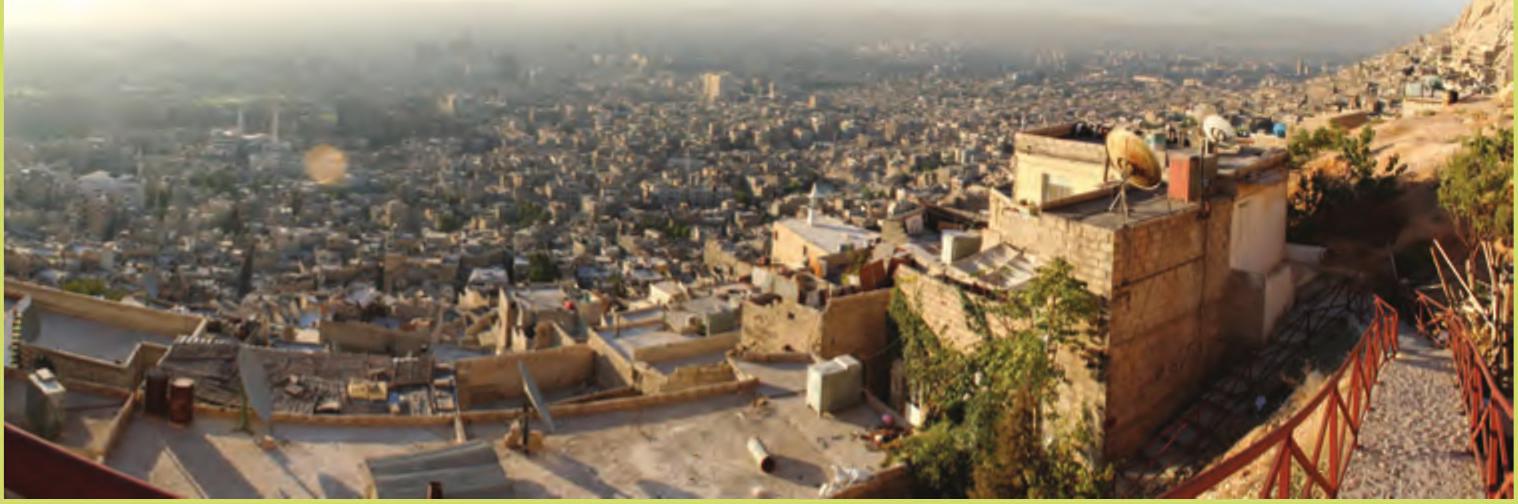
Damascus
Damascus is the oldest continually-inhabited city in the world and capital of Syria (7:8), located northeast of the Sea of
Galilee. The Bible first mentions the city as the hometown of Eliezer, Abraham’s servant (Gen. 15:2). Damascus was situated
on the border of the desert at the intersection of three major caravan routes. Major roads extended from the city to the
southwest into Canaan and Egypt, straight south to Edom and the Red Sea, and east to Babylonia. Because of its ideal
location, the city became a trade center.
The Assyrian King Tiglath-Pileser conquered Syria, overthrowing the Aramean dynasty and destroying Damascus
(732 b.c.), just as the prophets Amos and Isaiah had prophesied (Is. 17:1; Amos 1:4, 5). This marked the end of Syria as an
independent nation. The city of Damascus was also reduced to a fraction of its former glory.
Panoramic view of modern Damascus
Wikimedia Commons
Original illustrations
End of source page 1116