PRINTED PAGE 1041NKJV · STUDY EDITION
Song of Solomon INTRODUCTION 1041
vineyards all over the nation. One was close to Baal Hamon in the northernmost part of Galilee near the foothills
of the mountains of L ebanon. On one of his visits to this vineyard, Solomon met a young woman. Strangely
we never learn her name. She is called simply the Shulamite. For some time he pursued her and made periodic
visits to her country home to see her. Finally, he proposed. T he Shulamite gave much thought to whether she
really loved Solomon and could be happy in the palace of a king. Finally she accepted.
Theology If the Bible is the book about God, then one may well ask what a narrative about human sexuality
has to do with theology. T his is an even more potent question when one observes that God is never mentioned
in the entire text (except possibly in 8:6) nor are there any references to prayer, worship, or piety. In this respect
it bears similarities to the Book of Esther, which also does not mention God. Nevertheless, Esther is a story of
the redemption of God’s people and includes episodes of prayer, fasting, and thanksgiving. Such themes are
notably absent from Solomon’s poetic story, making it unique among the books of the Bible.
To resolve this difficulty, it is important to remember that the Bible not only describes who God is and
what God does, it also tells us what God desires for His people. T he Song of Solomon provides an example of
how God created male and female to live in happiness and fulfillment. People are created as sexual beings. It
would be wrong to suggest that the full experience of our humanity is impossible apart from sexual union in
marriage, since this would disqualify the widowed, divorced, and the celibate—including our Savior who was
celibate. At the same time, God ordained marriage from the beginning of creation: Man and woman were to
become one flesh (Gen. 2:25).
Because of its emphasis on human love, this book presents an extraordinary variety of expressions for love,
perhaps the richest selection in all Hebrew Scripture. But within this celebration of love, the book condemns
unchaste relations outside of marriage—and in particular, sexual experimentation before marriage. Indeed,
this book may contain the Bible’s strongest argument for chastity before marriage. Ironically because of its
explicit language, ancient and modern Jewish sages forbade men to read the book before they were 30 (and
presumably kept women from reading it at all). We cannot ignore the sexual content of the book, but we can
appreciate the context in which it is placed—a godly marriage. T he Song of Solomon is necessary reading not
only for the married, but for young people who want to understand God’s design for marriage.
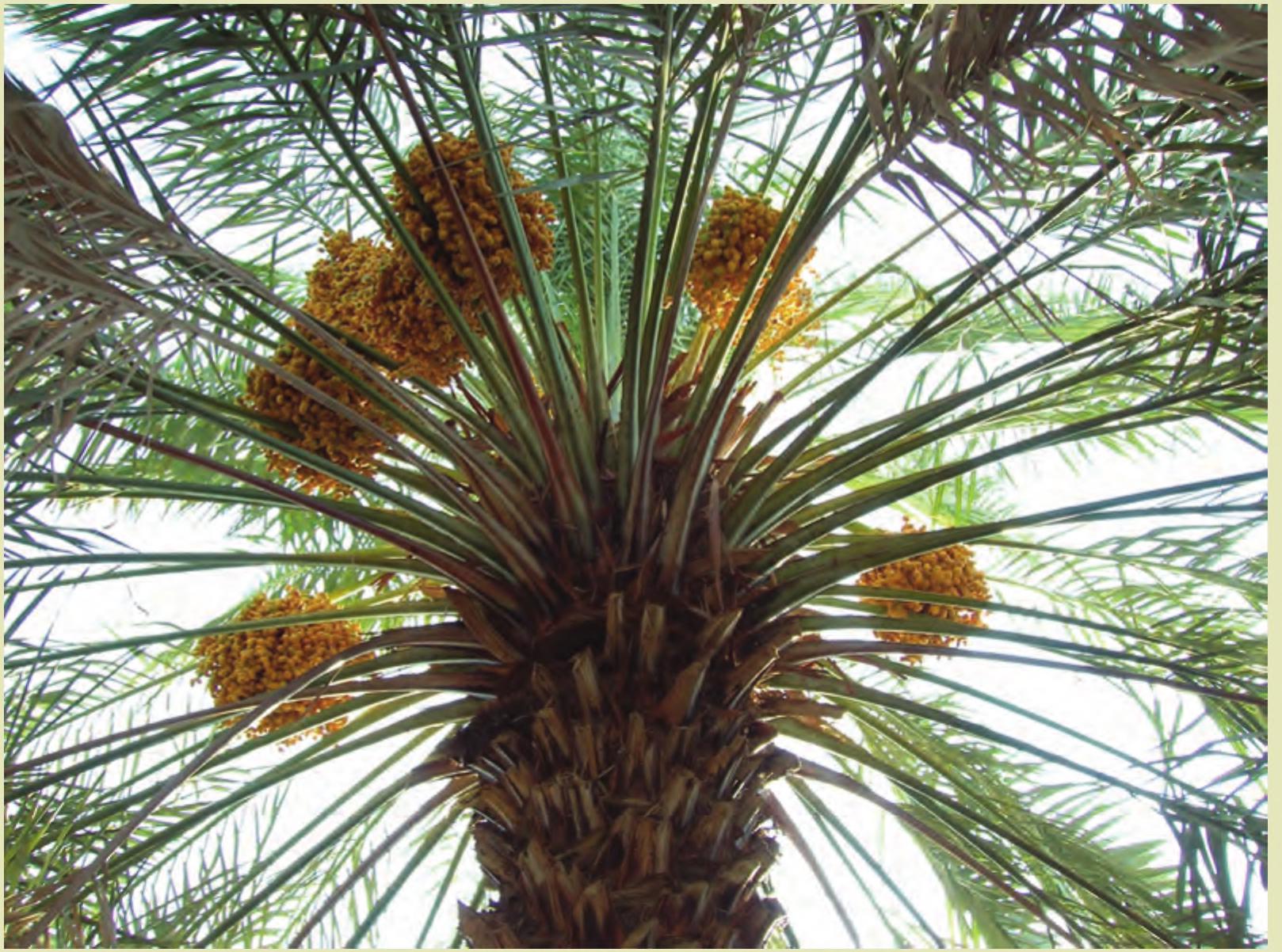
The date palm was a treasured tree in the ancient Near East. It was sometimes associated with fertility goddesses
and is compared with the stature of a woman in Song of Solomon 7:7.
Wikimedia Commons
Original illustrations
End of source page 1076