PRINTED PAGE 1024NKJV · STUDY EDITION
1024 Ecclesiastes INTRODUCTION
Christ in the Scriptures
Ecclesiastes is a candid commentary on the
emptiness and inner perplexity that marks
the life of one who is disconnected from
his Creator. It’s a journal of honest doubts,
hopes, and fears. Because all people have
“eternity in their hearts” (3:11), there is a
purpose for Jesus to disrobe Himself of
His divine dignity and descend to our sin-
ful planet. In that we bear God’s image, He
desires to enter our world to provide the
necessary remedy in order to maximize our
eternal potential. As we peer into the look-
ing glass and see the sad state of life lived
apart from the L ord, we recognize that only
in Jesus can ultimate satisfaction, wisdom,
and joy be found.
Ecclesiastes Outline
I. Prologue 1:1–11
II. T he search for the chief good in wisdom and pleasure 1:12—2:26
A. T he quest for wisdom and pleasure 1:12—2:11
B. T he comparison of wisdom and pleasure 2:12–26
III. T he search for the chief good in business 3:1—5:20
A. God’s determination of the quest 3:1–15
B. Human injustice and perversity 3:16—4:3
C. Human rivalries 4:4–8
D. Five illustrations of a better way: cooperation 4:9–16
E. Worship of God 5:1–7
F. Trust in the L ord 5:8–20
IV. T he search for the chief good in wealth 6:1—8:15
A. T he quest for wealth 6:1–12
B. T he quest for the golden mean 7:1—8:15
V. T he conclusion of the search for the chief good 8:16—12:8
A. T he futility of wisdom 8:16—9:6
B. T he futility of pleasure 9:7–12
C. T he futility of business and its rewards 9:13—10:20
D. T he chief good in wise use and enjoyment of this present life 11:1–8
E. T he chief good in a faith in the life to come 11:9—12:8
VI. Epilogue 12:9–14
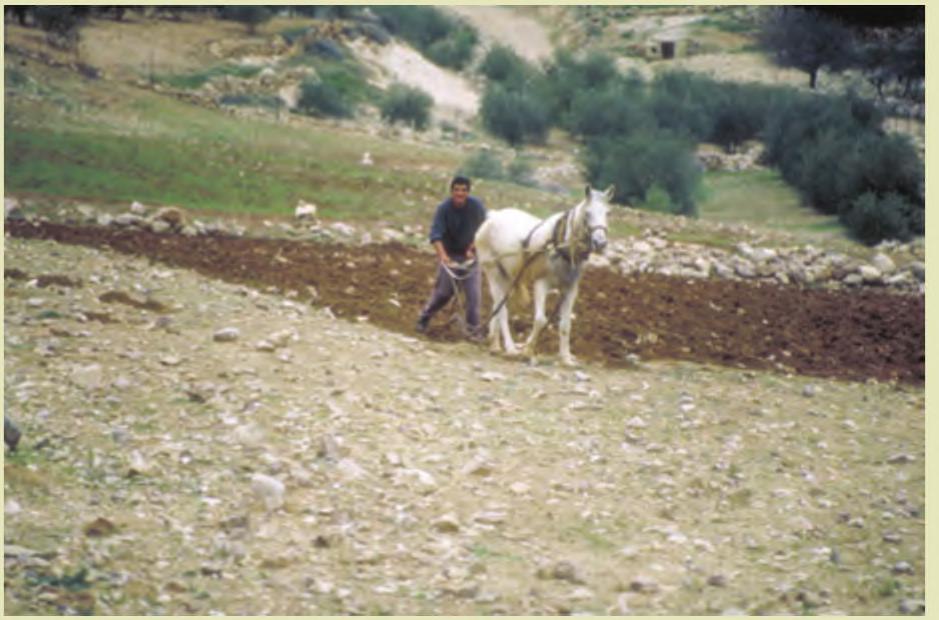
A farmer plowing his vineyard. “A time to plant, and a time to pluck
what is planted” (Eccl. 3:2).
© 1995 by Phoenix Data Systems
Original illustrations
End of source page 1059