PRINTED PAGE 977NKJV · STUDY EDITION
Proverbs INTRODUCTION 977
appear elsewhere as well. We might expect all proverbs on poverty to be in one section and all on child-rearing
in another, but these and many other topics are interspersed throughout the collection. Sometimes repeated
words or sounds are the link between separate sentences. Or it may be that phrases repeat, suggesting a new
linking of ideas.
In addition to the proverbs that stand alone, at the beginning and ending of the book sections of extended
instruction appear together (chs. 1–9; 30; 31). T hese chapters contain some of the same proverbs as the rest of
the book, but as units they differ greatly from the main section of Solomon’s proverbs (10:1—22:16). Unlike the
scattered arrangement of Solomon’s main section, these chapters develop themes.
Purpose and Theme T he prologue states the book’s purpose and theme (1:1–7): it is to give a course of
instruction in wisdom, preparation for life, and the ways of life in God’s world. Many topics, such as riches, suc-
cess, and social relations, appear in other collections of wisdom literature that have survived from the ancient
Middle East, but they are treated differently. Israel’s contribution to wisdom literature was to place all wisdom
in the context of faith in the L ord. T he words “T he fear of the L or d is the beginning of knowledge” (1:7) set
the record straight, so to speak. T his is the foundation on which all other wise sayings stand. It is the Book of
Proverbs’ central idea: Fear of the L ord motivates us to obey God’s commandments, and obedience to them
constitutes true wisdom.
Christ in the Scriptures
Although Jesus is not identified by name in 8:22–31, it is clear that the writer is describing Him. Wisdom, godlike
and perfect, is personified: “I have been established from everlasting, from the beginning, before there was
ever an earth . . . When He prepared the heavens, I was there . . . I was beside Him as a master craftsman; and I
was daily His delight” (8:23, 27, 30). Compare that to John 1:1, 3, “In the beginning was the Word, and the Word
was with God, and the Word was God . . . All things were made through Him, and without Him nothing was
made that was made.” T his divine wisdom is also the source of biological and spiritual life (3:18; 8:35). It is right
and moral (8:8, 9), and it is available to all who will receive it.
Proverbs Outline
I. Prologue: title, purpose, and theme 1:1–7
II. T he invitation and instruction of wisdom
1:8—9:18
III. Solomon’s proverbs 10:1—22:16
IV. T he sayings of the wise 22:17—24:22
V. Further sayings of the wise 24:23–34
VI. Solomon’s proverbs transcribed by
Hezekiah’s men 25:1—29:27
VII. T he instruction of Agur 30:1–33
VIII. T he instruction of King L emuel’s mother
31:1–9
IX. Epilogue: the acrostic poem on the virtuous
wife 31:10–31
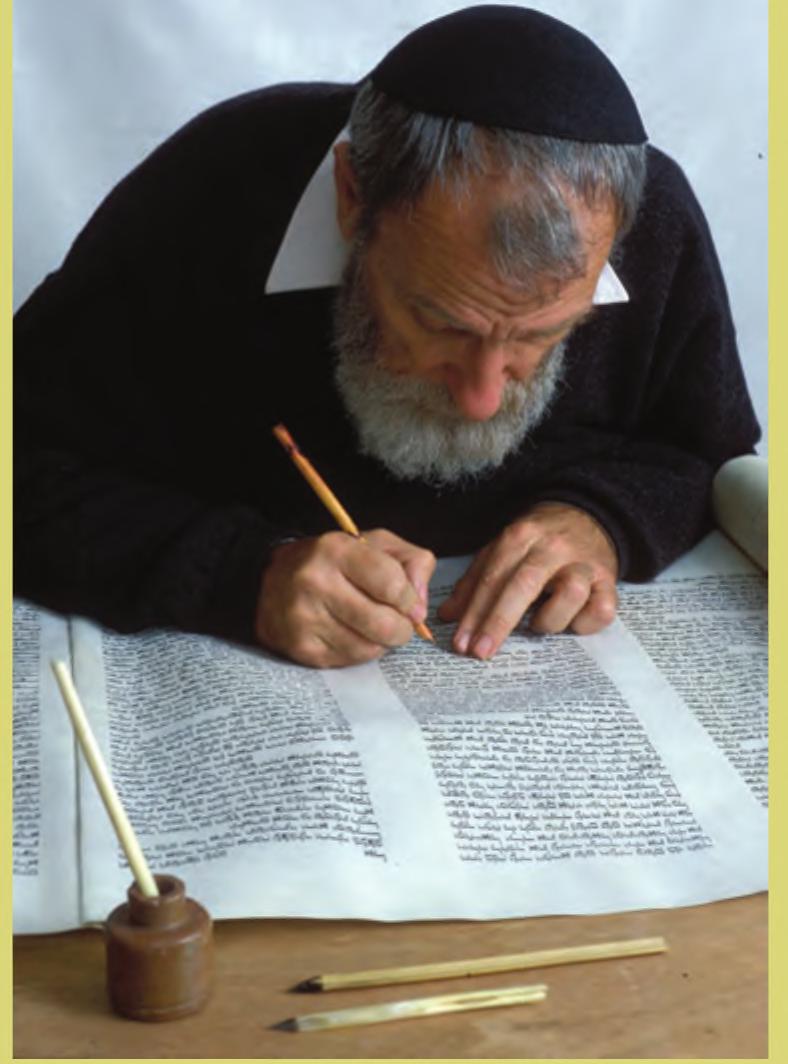
A book like Proverbs would have likely been given to
scribes and copied over and over.
Z. Radovan/www.BibleLandPictures.com
Original illustrations
End of source page 1012