PRINTED PAGE 966NKJV · STUDY EDITION
966 | Psalm 138:8
Psalm 139, attributed to David, is a wisdom psalm of descriptive
praise. This mixture of wisdom and praise is not uncommon in the
Psalms (see Ps. 145; 146). This poem describes the attributes of the
Lord not as abstract qualities, but as active qualities by which He
relates Himself to His people. The structure of the psalm is: (1) a
description of God’s intimate knowledge of His servant (vv. 1–6);
(2) a celebration of God’s presence with David (vv. 7–12); (3) a
celebration of God’s creation of David from the moment of
conception (vv. 13–16); (4) a declaration that God’s thoughts toward
David are innumerable (vv. 17, 18); (5) a prayer for the punishment
of God’s enemies (vv. 19–22); (6) a prayer that God might search and
lead David (vv. 23, 24).
139:1–5 You have searched me: God is active to search and test
His servants. He knows our motives, desires, and words before they
are expressed. In short, He knows His servants completely. But as
v. 5 makes clear, the purpose of His intimate knowledge of His ser-
vants is protective and helpful, not judgmental and condemning.
139:7 There are two different ways in which the words where can
I go can be understood. One is that David wanted to flee from the
presence of God, but could not. The second view takes the words as
a celebration of God’s mercy, that there was no place in all creation
where David, the servant of God, would find himself separated
from God’s presence.
8 i Ps. 57:2; [Phil.
1:6] j Job 10:3, 8
1 complete
PSALM 139
1 a Ps. 17:3; Jer. 12:3
2 b 2 Kin. 19:27 c Is.
66:18; Matt. 9:4
3 d Job 14:16; 31:4
1 Lit. winnow
4 e [Heb. 4:13]
5 2 enclosed
6 f Job 42:3; Ps. 40:5
7 g [Jer. 23:24;
Amos 9:2-4]
8 h [Amos 9:2-4]
i [Job 26:6; Prov.
15:11] 3 Or Sheol
And are acquainted with all my
ways.
4 For there is not a word on my tongue,
But behold, O LORD, e You know it
altogether.
5 You have 2 hedged me behind and
before,
And laid Your hand upon me.
6 f Such knowledge is too wonderful for
me;
It is high, I cannot attain it.
7 g Where can I go from Your Spirit?
Or where can I flee from Your
presence?
8 h If I ascend into heaven, You are
there;
i If I make my bed in 3 hell, behold,
You are there.
8 i The LORD will 1 perfect that which
concerns me;
Your mercy, O LORD, endures forever;
j Do not forsake the works of Your
hands.
PSALM 139
God’s Perfect Knowledge of Man
For the Chief Musician. A Psalm of David.
O
LORD, a You have searched me and
known me.
2 b You know my sitting down and my
rising up;
You c understand my thought afar
off.
3 d You 1 comprehend my path and my
lying down,
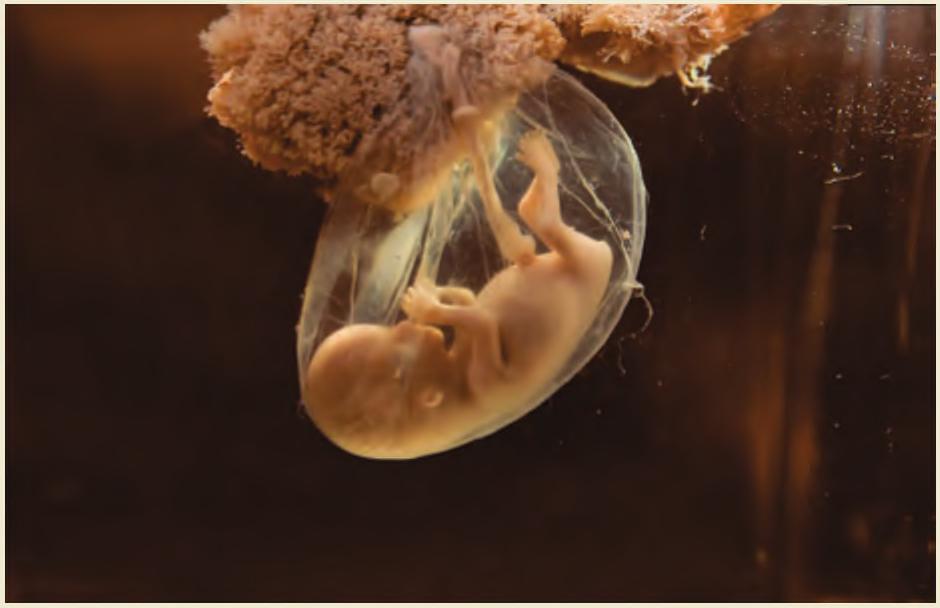
Psalm 139:13–16 declares that an unborn child shares in God’s image.
© leptospira/www.123RF.com
The Sanctity of Life: Created in His Image
God places special value on human life (Gen. 1:26, 27; Ps. 8:4–6). Human life is sacred because the man and woman alone
were created in the image of God, and that life deserves protection. God commands His people to protect and defend
innocent human life (Ezek. 16:20, 21, 36, 38). Under the Mosaic Law, the murder of another person deserved punishment
by death because of the value of the life that was destroyed (Gen. 9:6; Ex. 20:13).
Scripture extends this special status and protection to human life in every stage of development and need (Is. 46:3, 4).
The unborn child shares in God’s image (Ps. 139:13–16) and is protected under Old Testament law (Ex. 21:22–25). Believers
are exhorted to defend and care for the sick, the elderly, and the poor (Lev. 19:32; Deut. 15:7, 8). No one is excluded from
protection and care.
Throughout history this biblical view of the sanctity of all human life has faced opposition—most notably from
those who advocate a “quality of life” view-
point, suggesting that human life must pos-
sess certain qualities and abilities before it can
be considered truly valuable and worthy of life
sustenance. According to this distorted human-
istic view, if the unborn child, the handicapped
infant, or the elderly person does not possess
these qualities, that individual is not entitled
to the protection which Scripture or the Law
would give.
The Bible rejects this “quality of life” view.
The value of human life does not depend upon
the person’s functional abilities or independent
viability but is assured because of the image of
God which is found in every human life. God
does not measure the quality of a human being
before He bestows His image. God calls upon us
to extend our care and compassion to every life
He has created, in every stage of development
and in every need.
Original illustrations
End of source page 1001